

- Aqaba University of Technology — Host institution
- IEEE Jordan Section — Co-organiser
About
About IEEE SEA 2027
SEA 2027 is the first edition of the 2027 IEEE International Conference on Smart Engineering and Advanced Technologies. It runs 5, 6 and 7 May 2027 at Aqaba University of Technology, on the Gulf of Aqaba, and it exists because a coastal engineering agenda in Jordan has nowhere else to meet.
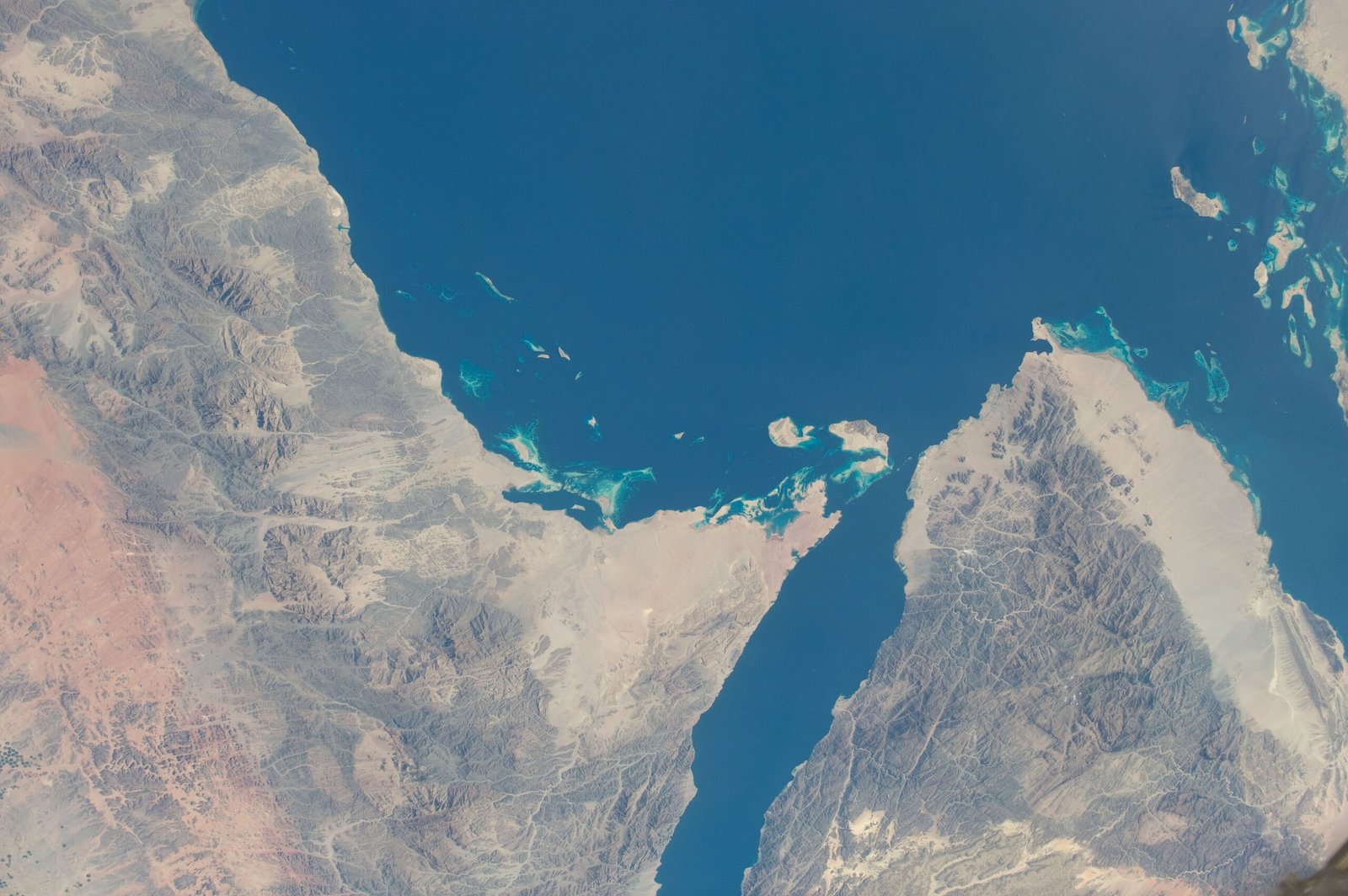
Jordan has 27 kilometres of coastline and one coastal city. Everything the country does at sea — its only seaport, its desalination and water security planning, a marine reserve covering roughly a quarter of that coast, and the sensing, communication and autonomy needed to work in any of it — happens inside those 27 kilometres. That is why Ocean Sciences, Blue Technologies and Coastal Engineering is one of the seven tracks rather than a workshop bolted onto the side, and why the conference is sited on the water instead of in the capital.
The other six tracks are the engineering that a coastline turns out to need: underwater and maritime links, unmanned surface and underwater vehicles, sensor networks that survive salt, grids that have to run a port, and the security and health systems behind all of it. Papers that cross those boundaries are the point.
First edition
Hybrid · In-person and virtual
Seven tracks
The setting
Why Aqaba, and not Amman.
A conference venue is usually a neutral container. This one is not meant to be.
Aqaba is Jordan’s only coastal city and its only seaport, at the northern tip of the Red Sea. The Aqaba Marine Reserve, established in 1997, protects about 7 km of that coast — 2.8 km², roughly 27% of the national shoreline — and 157 hard coral species and 507 fish species have been recorded there. Reefs are entered from the beach. A researcher working on coastal sensing can be in the water within twenty minutes of a session ending.
The city is also a special economic zone with its own entry regime, which makes it unusually cheap and simple to reach for an international delegation. King Hussein International Airport (AQJ) is a short drive north of the centre; Wadi Rum is about 60 km away and Petra roughly two hours. The programme is built on the assumption that some delegates will extend the trip — Wadi Rum and Petra are close enough to make that worthwhile.
Travel, entry rules and costs are set out on the travel and visas page, and the region around the venue on Discover Aqaba.
Publication
What “technically co-sponsored by IEEE” means in practice.
Technically Co-Sponsored by IEEE
IEEE SEA 2027 is technically co-sponsored by IEEE. Accepted and presented papers are submitted for inclusion in IEEE Xplore, subject to IEEE’s quality and scope review.
Technical co-sponsorship is a defined IEEE relationship, and it is worth being precise about it. An IEEE organisational unit has direct involvement in the technical programme, but no financial stake in the event. IEEE is not the conference’s financial sponsor and does not underwrite it. What co-sponsorship does provide is the review framework and the route to publication.
That route has conditions, and they are the ones authors most often trip over:
- Papers are peer-reviewed by the Technical Programme Committee of the track they were submitted to.
- Camera-ready PDFs must pass IEEE PDF eXpress and carry a completed IEEE electronic copyright form. The deadline is 1 April 2027.
- At least one author of every accepted paper must complete a full author registration by 5 April 2027 for the paper to appear in the programme.
- A paper in the final programme that is not presented — in person or through an approved remote slot — is not submitted to IEEE Xplore. This is IEEE’s non-presented paper policy, not a local rule.
- Inclusion in IEEE Xplore is subject to IEEE’s own quality and scope review after the conference. No conference can guarantee it in advance, and any that says otherwise is overstating.
Submissions go through EDAS. The full formatting, plagiarism and submission rules are in the author kit.
The numeric conference ID needed to create an IEEE PDF eXpress account is issued by IEEE and published on the author kit page once it is assigned.
Format
Hybrid, and what remote participation gets you.
Every session is streamed. Authors unable to travel may present remotely.
In person, in Aqaba
All three days on campus at Aqaba University of Technology: the technical sessions, the plenary talks, the workshop and tutorial programme, and whatever else the registration rate covers on site. Corridor conversation, which is most of why anyone travels, only happens here.
Remote
A live stream of every session, a presentation slot with live question and answer for authors who cannot travel, and the same publication path — a paper presented remotely under an approved arrangement counts as presented. What it does not include is the venue, the meals, the excursions or the room.
Streaming platform and joining details
The platform, the joining links and the rules for remote presenters are published with the programme. Whether remote registration is priced separately from in-person attendance is still being decided; the fee table is on the registration page as soon as it is set.
Audience
Who this is for.
Academic researchers and doctoral students working in any of the seven tracks; engineers from industry who would rather present a deployed system than a simulation; people working on Jordan’s marine, port, water and energy infrastructure; and IEEE members from the region who want a technical venue closer than Europe.
It is a first edition, which is worth stating plainly. There is no attendance history to quote and no back catalogue of proceedings. What there is: seven independently chaired tracks, a defined review process, a published deadline calendar and a route to IEEE Xplore.
Programme
What the three days contain.
Indicative structure — the session grid, times and room allocations are not published yet and will change.
- Day one
- Opening, a plenary talk, and the first parallel technical sessions.
- Day two
- Parallel technical sessions across the tracks, and a second plenary slot.
- Day three
- The remaining technical sessions and the close.
- Workshops
- Workshops and tutorials are scheduled as their own strand — see workshops and tutorials.
Session-by-session programme
Built from the accepted papers, so it cannot exist before the review decisions on 1 March 2027.
Host institution
Aqaba University of Technology.
AUT is a private university founded in 2015, which admitted its first students for the 2015/2016 academic year and is described as the first private university in southern Jordan. It sits about 15 kilometres south of Aqaba, on hills overlooking the gulf.
It opened with two faculties — Administrative and Financial Sciences, and Information Technology — and has since added Engineering, Pharmacy, and Literature and Life Sciences, at undergraduate and postgraduate level. The Faculty of Engineering is the institutional tie to this conference, and the university is co-organising it with IEEE Jordan Section.
Campus facilities, room allocations and directions from the airport are on the venue page.
Reference
At a glance.
- Dates
- 5, 6 and 7 May 2027 · Arabia Standard Time (UTC+3)
- Venue
- Aqaba University of Technology, Aqaba, Jordan
- Format
- Hybrid — In-person and virtual. Every session is streamed.
- Tracks
- 7, each independently chaired and reviewed: Communications & IoT, Robotics & Automation, Cybersecurity & Trust, Smart Health, Ocean & Blue Tech, Energy & Smart Grids, Aerospace & Space.
- Language
- English, for submissions, presentations and the proceedings.
- Submission system
- EDAS. The track submission link is published on the call for papers page once the conference is registered in EDAS.
- Publication
- Accepted and presented papers are submitted for inclusion in IEEE Xplore, subject to IEEE’s quality and scope review.
- Organised by
- Aqaba University of Technology and IEEE Jordan Section
- Technical co-sponsor
- IEEE
- Contact
- info@ieeesea.net · all enquiry routes
Next step
Read the call, then check the dates.
The call for papers has the scope, the submission requirements and the five deadlines. Registration carries the fee structure and the author-registration rule that decides whether an accepted paper is published.