

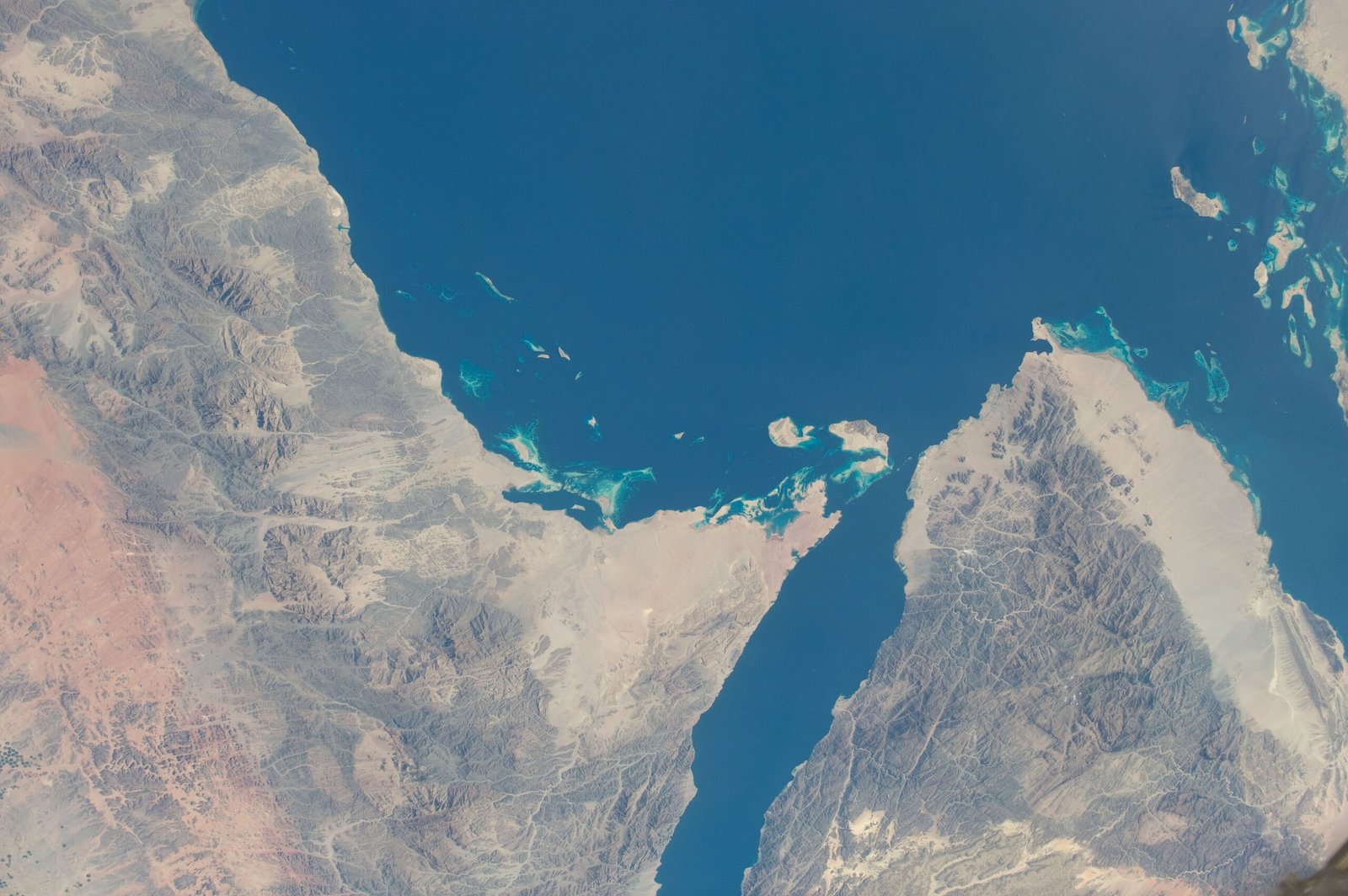
Photograph from the International Space Station showing the Gulf of Aqaba between the Sinai Peninsula and Arabia.

Call for papers

Tracks and topics

Seven tracks and 72 listed topics. Each track is chaired independently and reviewed by its own committee, so the track you choose decides who reads your paper.

Photo: NASA, Earth Science and Remote Sensing Unit, Johnson Space Center · Public domain

Choosing a track

Match the reviewers, not the keywords. Ask which community would be best placed to judge the contribution — the one that knows the method, or the one that knows the application — and submit there.

Plenty of good work belongs to two tracks at once: an autonomous underwater vehicle is robotics and ocean engineering; a federated learning scheme for patient data is cybersecurity and smart health. Submit to the closest fit and name the second track in the first paragraph of the abstract. The technical programme chairs can reassign a paper before review if the other committee is the better reviewing pool, and they do so without penalty to the submission.

The topic lists below are the scope statement, not a filter. Work that is adjacent to a listed topic is in scope; work with no plausible reader in any of the seven committees is not.

How a track is reviewed

One committee per track

Every submission is read by reviewers drawn from the committee of the track it was submitted to, and the decision is returned with the full reports. A paper reassigned to another track is reviewed by that track’s committee instead — the deadline and the decision date do not change.

Track chairs and technical programme committee

The chairs of the seven tracks and the reviewers serving on each committee are named here once the technical programme chair has completed the invitations.

Expected: Before submissions open

The four confirmed conference chairs are on the committees page.

Track 01

10 topics

Communication, Networking, Antennas and Internet of Things

The physical and logical fabric that moves information — from antenna elements to planet-scale networks.

Topics include

  • 5G/6G systems and open radio access networks
  • Antenna design, metamaterials and reconfigurable surfaces
  • Millimetre-wave, terahertz and free-space optical links
  • Software-defined networking and network function virtualisation
  • Edge, fog and cloud continuum architectures
  • IoT protocols, low-power wide-area networks and LPWAN deployment
  • Wireless sensor networks and energy-harvesting nodes
  • Semantic and goal-oriented communication
  • Underwater and maritime communication systems
  • Network measurement, modelling and performance evaluation
Submit to this track

Track 02

10 topics

Industrial Electronics, Intelligent Systems, Robotics, and Automation

Machines that sense, decide and act — power electronics, control, autonomy and the factory floor.

Topics include

  • Autonomous mobile robots and field robotics
  • Human–robot interaction and collaborative manufacturing
  • Motion planning, SLAM and perception
  • Power electronics, motor drives and mechatronics
  • Industrial IoT, digital twins and predictive maintenance
  • Model predictive, adaptive and robust control
  • Machine learning for control and reinforcement learning in the loop
  • Unmanned surface, underwater and aerial vehicles
  • Embedded systems, real-time computing and edge AI accelerators
  • Industry 4.0/5.0 architectures and smart manufacturing

Submit to this track

Track 03

11 topics

Cybersecurity, Privacy, and Trustworthy Technologies

Keeping connected systems safe, private and accountable as they take on consequential decisions.

Topics include

  • Network, cloud and container security
  • Applied cryptography and post-quantum readiness
  • Intrusion detection, threat intelligence and security analytics
  • Privacy-enhancing technologies, differential privacy and federated learning
  • Adversarial machine learning and model robustness
  • Blockchain, distributed ledgers and verifiable computation
  • Critical infrastructure, SCADA and OT security
  • IoT and embedded device security
  • Digital forensics and incident response
  • Trustworthy, explainable and auditable AI systems
  • Security governance, standards and regulatory compliance

Submit to this track

Track 04

10 topics

Smart Health and Biomedical Engineering

Engineering that reaches the patient — instrumentation, imaging, wearables and clinical decision support.

Topics include

  • Biomedical signal and image processing
  • Wearable, implantable and point-of-care devices
  • AI for diagnosis, prognosis and clinical decision support
  • Telemedicine, remote monitoring and connected care
  • Medical robotics and computer-assisted intervention
  • Health informatics, interoperability and electronic health records
  • Bioinformatics and computational biology
  • Rehabilitation engineering and assistive technology
  • Neural engineering and brain–computer interfaces
  • Regulatory, safety and ethical aspects of medical technology

Submit to this track

The signature track

Track 05 is why the conference is in Aqaba.

Jordan’s coastline is 27 kilometres long and carries the country’s only port, a marine reserve and a fast-growing city on the same water. Ocean sciences, blue technologies and coastal engineering get the widest scope of the seven tracks and a plenary session of their own.

The Red Sea, up close

Track 05

11 topics

Ocean Sciences, Blue Technologies, and Coastal Engineering

The track this conference was built around. Engineering at the water’s edge, on a coastline that depends on it.

Topics include

  • Marine sensing, observation networks and ocean data platforms
  • Underwater acoustics, imaging and communication
  • Autonomous underwater and surface vehicles
  • Coral reef monitoring, restoration and marine conservation technology
  • Coastal protection, sediment transport and shoreline engineering
  • Port, harbour and maritime logistics engineering
  • Desalination, water treatment and brine management
  • Offshore renewable energy and marine hydrokinetics
  • Aquaculture technology and the blue bioeconomy
  • Sea-level rise, climate resilience and coastal risk modelling
  • Marine pollution detection and remediation

Submit to this track

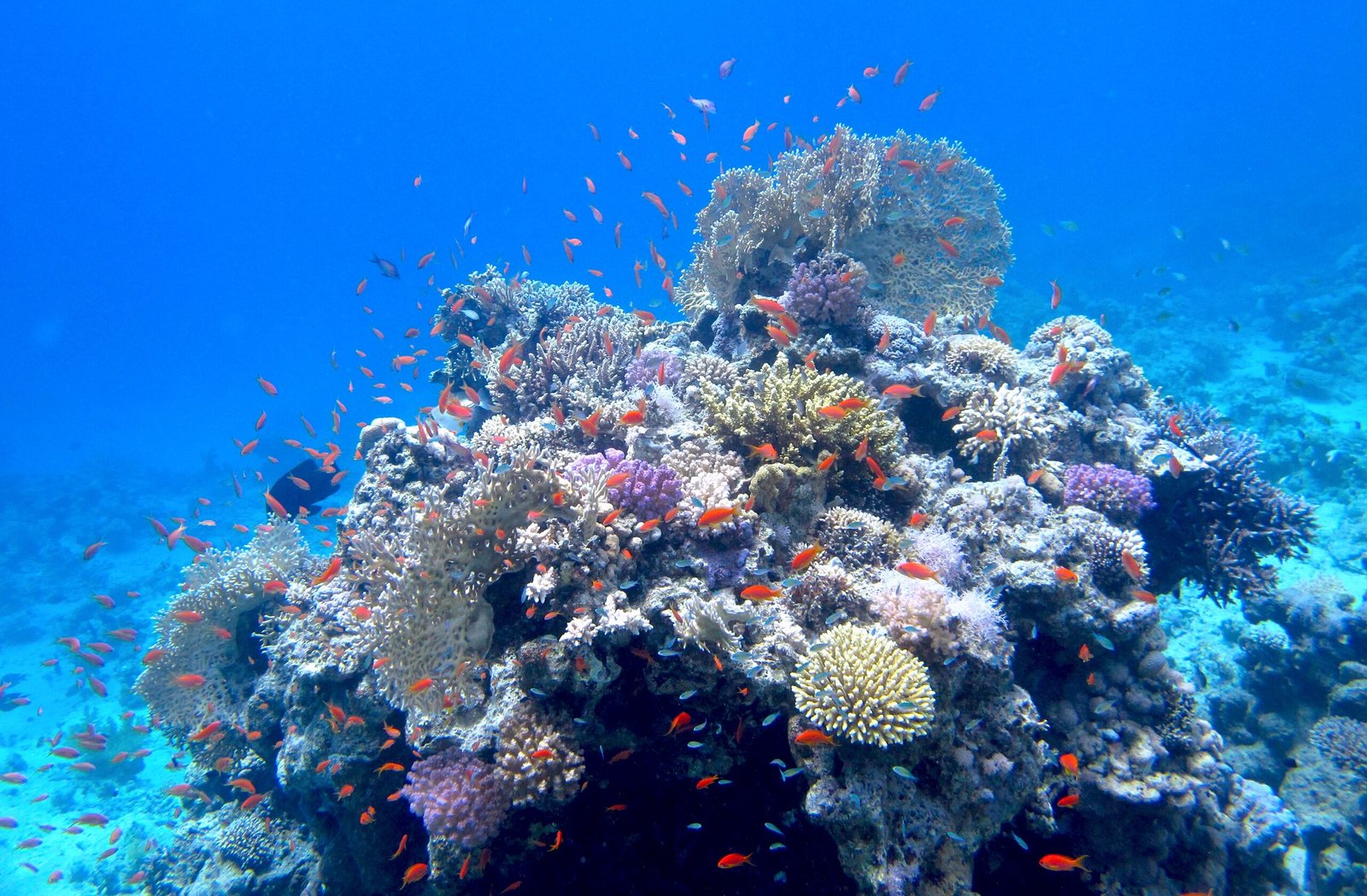
Coral pinnacle covered in hard and soft corals with small orange fish, surrounded by deep blue Red Sea water.
Soft corals crowd a pinnacle in open mid-water Photo: 74papa · CC BY 4.0

Track 06

10 topics

Sustainable Energy and Smart Grids

Generating, storing, moving and trading energy in a system that has to decarbonise while staying up.

Topics include

  • Photovoltaics, concentrated solar power and wind energy systems
  • Smart grid architecture, protection and wide-area monitoring
  • Microgrids, islanding and rural electrification
  • Energy storage, battery management and second-life systems
  • Electric vehicles, charging infrastructure and vehicle-to-grid
  • Demand response, energy markets and grid economics
  • Power quality, stability and inverter-dominated grids
  • Green hydrogen and sector coupling
  • Energy efficiency in buildings, industry and data centres
  • AI and forecasting for renewable integration

Submit to this track

Track 07

10 topics

Aerospace, Aviation, and Space Technologies

From runway to orbit — avionics, propulsion, small satellites, remote sensing and air traffic in transition.

Topics include

  • Avionics, flight control and guidance systems
  • Unmanned aerial systems and urban air mobility
  • Small satellites, CubeSats and constellation design
  • Satellite communication and non-terrestrial networks
  • Remote sensing, Earth observation and geospatial analytics
  • Propulsion, aerodynamics and structures
  • Air traffic management and airspace integration
  • Space situational awareness and debris mitigation
  • Navigation, GNSS and alternative positioning
  • Sustainable aviation fuels and electrified flight

Submit to this track

These lists are indicative, not exhaustive

The 72 topics above describe the scope the technical programme committee expects to review. They are not a closed list. Adjacent work is considered on its merits, and the committee can extend a track’s topics at any point before review opens. If you cannot tell whether your paper fits, write to the organisers with the title and abstract before the deadline rather than guessing.