

Arrive at one of these
- King Hussein International Airport (AQJ), Aqaba
- Aqaba seaport
- The Aqaba land crossings — Durra (Saudi Arabia) and Wadi Araba (Israel)
Aqaba · Jordan
Aqaba is easier to enter than most people expect, and the reason is a rule specific to this city. Everything below is written for a delegate flying in for 5–7 May 2027 and, in most cases, staying a few days longer.
15min
From King Hussein International Airport to the city centre
55min
Flight time from Amman to Aqaba
0JOD
Visa fee when you arrive and depart through Aqaba
~2%
Chance of rain on any given day in May
The zero applies when you both arrive and depart through Aqaba. Read the conditions below before you book a flight out of Amman.
Entry
Three separate mechanisms, and delegates routinely mix them up. Work out which one applies to you before you buy a ticket, because the routing you choose decides which one you get.
Fee
40 JOD, 30 days, single entry.
Where
Queen Alia International (AMM), King Hussein International (AQJ) and the land borders — with one exception.
The exception
There is no visa on arrival at the Allenby / King Hussein Bridge crossing. Delegates entering there must hold a visa issued in advance.
Visa-free
GCC nationals (Saudi Arabia, the UAE, Kuwait, Qatar, Bahrain and Oman) enter without a visa for up to three months in any six-month period. Nationals of several Arab states, including Egypt, Lebanon, Turkey and Tunisia, also enter visa-free.
Eased entry
Jordan has also eased entry for holders of a valid Schengen or United States visa and for foreign residents of GCC states. Conditions vary; check with the nearest Jordanian embassy.
Some passports need approval in advance
Nationals of Afghanistan, Iran and Pakistan, and of many African states, need prior approval and cannot use the visa on arrival. Lead times are measured in weeks, not days. If this may apply to you, start the process as soon as your paper is accepted — earlier if you can.
If you need a letter of invitation for a visa application, write to info@ieeesea.net once your paper is accepted.
Arrive directly into the Aqaba Special Economic Zone and the 40 JOD fee is waived entirely. You get a one-month stay for nothing. This is the single most useful fact on this page.
Arrive at one of these
And keep to both
There is no minimum stay
There is no minimum-stay requirement for the Aqaba waiver. The minimum-nights rule belongs to the Jordan Pass, and the two are widely confused online.
Enter or leave through any other point — including transiting Queen Alia in Amman — and the waiver does not apply. You pay the standard 40 JOD, and the 10 JOD land-departure tax if you leave overland.
Confirm this with ASEZA before you travel
The ASEZA website did not respond when this page was researched, so the detail above rests on secondary sources. Confirm the current rule with ASEZA, your airline or the nearest Jordanian mission before you travel, and keep proof of your inbound and outbound routing.
All three tiers cover entry to more than 40 sites, including Petra, Wadi Rum, Jerash, Ajloun and the Amman Citadel. They differ only in how many days at Petra you get.
| Tier | Price | Petra |
|---|---|---|
| Jordan Wanderer | 70 JOD | One day at Petra |
| Jordan Explorer | 75 JOD | Two consecutive days at Petra |
| Jordan Expert | 80 JOD | Three consecutive days at Petra |
Visa waiver
The Pass waives the tourist entry visa fee if you buy it before you arrive in Jordan and stay a minimum of two nights (three days). That is the wording on the official site; a number of secondary sources say three nights instead. Plan on at least three nights and you satisfy either reading.
Validity
Valid for three months from purchase and expires one month after first use. Buying it at the airport does not waive the visa — it has to be bought beforehand.
Worth buying
Worth it if you are visiting Petra (entry alone is 50 JOD) or routing in through Amman, where the 40 JOD visa fee applies.
Not worth buying
Not worth it if you fly into Aqaba, fly out of Aqaba and skip Petra — the Aqaba waiver already covers your visa and you would be buying site entries you will not use.
All prices are indicative 2025–26 figures in Jordanian dinars (JOD), pegged at 0.709 JOD to 1 USD. Treat them as planning figures and confirm at the time of booking.
Routes
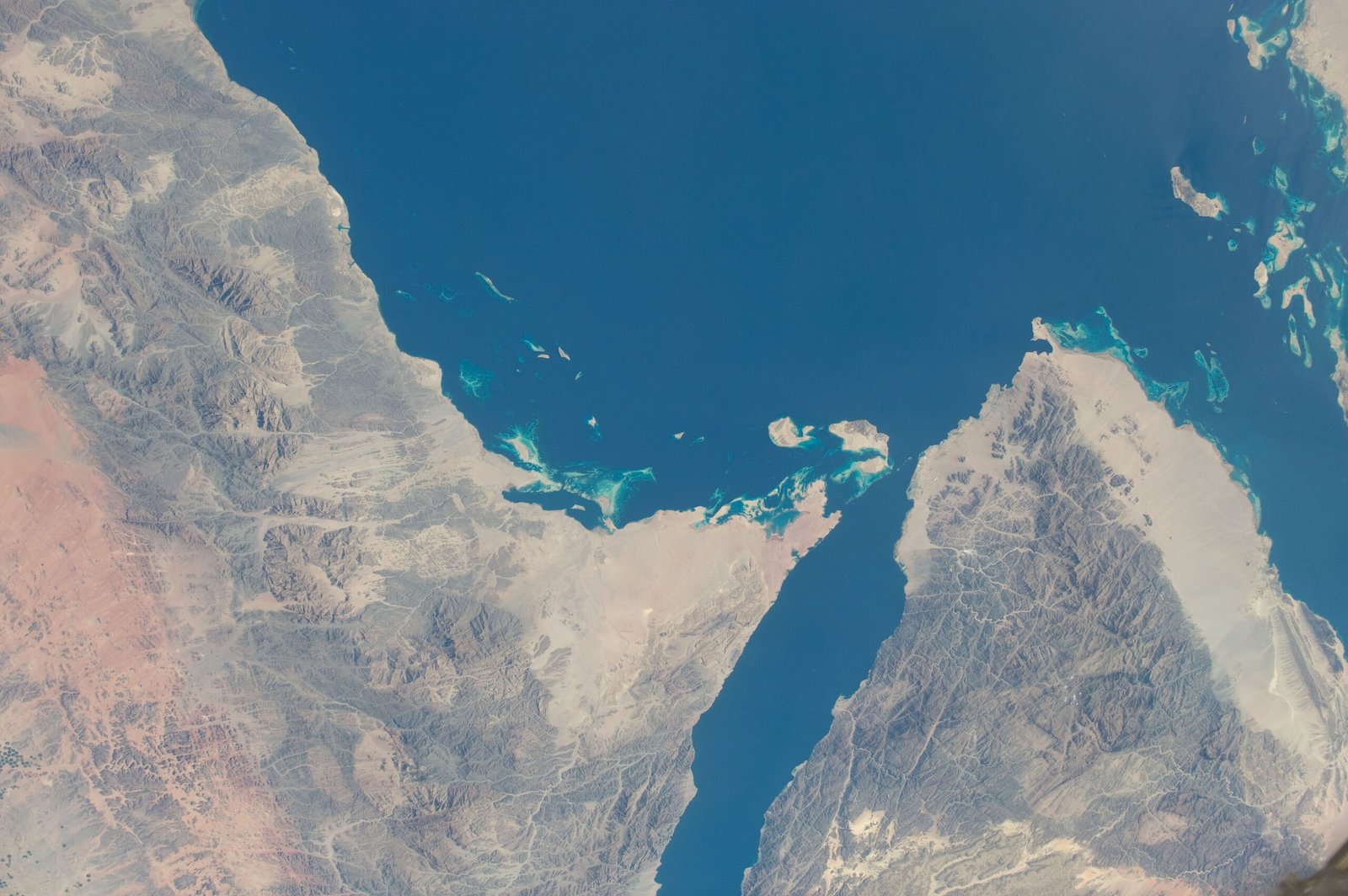
King Hussein International (AQJ) sits about 10–11 km from the city centre, some 15 minutes by road. It is a small airport — around 309,000 passengers in 2023 — and its route network is thin and changes often, so most delegates from outside the region will connect.
Queen Alia International (AMM) in Amman is the realistic gateway. From there it is either a one-hour flight or a four-to-five-hour coach down the Desert Highway. The choice has a visa consequence, so read the note in the table.
| Leg | Time | Indicative cost | Notes |
|---|---|---|---|
| Into Aqaba (AQJ) direct | — | Airline fare | Royal Jordanian flies from Amman daily and has announced Abu Dhabi and Riyadh services. Other routes come and go — Istanbul and European low-cost services have run in the past and were not operating when this page was written. Check directly with the carriers rather than an aggregator. |
| Amman (AMM) → Aqaba (AQJ) by air | 55–60 min | ≈30–60 JOD one way | Royal Jordanian is the sole operator, roughly three nonstop flights a day. Note that clearing immigration at Amman forfeits the Aqaba visa waiver. |
| Amman → Aqaba by coach | 4–5 h | ≈11 JOD | JETT runs from Abdali and 7th Circle in Amman down the Desert Highway (Route 15), about 330 km, roughly seven to eight departures a day between 07:00 and 21:00. Air-conditioned, assigned seats, one stop. |
| Amman → Aqaba by private car | ≈4 h | ≈60–100 JOD | Point to point, useful if you are arriving late or travelling as a group. |
| AQJ → Aqaba city centre | ≈15 min | 5–10 JOD | About 10–11 km. Sources differ between a typical 5–8 JOD fare and a fixed airport rate near 10 JOD. Agree the fare before you get in. |
Routing through Amman costs you the Aqaba waiver
You clear immigration at Queen Alia, which means you enter Jordan at Amman. Budget 40 JOD for the visa, or buy a Jordan Pass before you fly. Flying in and out of Aqaba is both cheaper and simpler if your connections allow it.
All prices are indicative 2025–26 figures in Jordanian dinars (JOD), pegged at 0.709 JOD to 1 USD. Treat them as planning figures and confirm at the time of booking.
Group transfers and a delegate travel desk
The organisers are looking at coordinated airport transfers and a recommended agent for delegates arriving on the same flights. Nothing is arranged yet.
Expected: With the registration opening
Practicalities
The Jordanian dinar has been pegged to the US dollar since 1995 at 0.709 JOD to the dollar, so roughly 1.41 dollars to the dinar. One dinar is 100 piastres, or 1,000 fils. The rate does not move, which makes budgeting unusually easy.
Carry both
Cards work in hotels, larger restaurants and shops. Cash dominates for taxis, small cafés, markets and tips. ATMs are common — at AQJ, across the centre and in hotels — but local withdrawal fees run around 4 JOD per transaction, so withdraw larger amounts less often. Always decline dynamic currency conversion when the machine offers to charge you in your home currency.
10 to 15 per cent
In restaurants, after checking whether service has already been added. Round up for taxis. One or two dinars for porters and housekeeping. Nobody will chase you for it, and it is genuinely appreciated.
| Item | Indicative price |
|---|---|
| Coffee | 1.5–3 JOD |
| Casual meal | 5–10 JOD |
| Mid-range dinner | 15–25 JOD |
| Taxi across town | 2–5 JOD |
| Bottled water, 1.5 L | ≈0.5 JOD |
All prices are indicative 2025–26 figures in Jordanian dinars (JOD), pegged at 0.709 JOD to 1 USD. Treat them as planning figures and confirm at the time of booking.
Practicalities
Three operators. Tourist SIMs are sold at the arrivals kiosks at AQJ and AMM and in city shops, and registration needs your passport. An eSIM from Airalo, Holafly or similar works and skips the queue, usually at a higher price per gigabyte.
| Operator | Indicative visitor plan | Notes |
|---|---|---|
| Zain | Visitor Line from ≈6 JOD (12 GB plus minutes, 7 days); a 90-day 5G visitor plan with 250 GB is around 33 JOD. | Best national coverage, including Wadi Rum and Petra. |
| Orange | Tourist SIM around 15 JOD (20 GB, 30 days). | Solid in Aqaba and on the main corridors. |
| Umniah | From around 6 JOD a week. | Cheapest, but weak outside Amman — avoid it if you are heading into the desert. |
Hotel and café WiFi in Aqaba is standard and usually adequate. Do not assume conference-grade uplink for a live demonstration — carry a local SIM as a fallback. All prices are indicative 2025–26 figures in Jordanian dinars (JOD), pegged at 0.709 JOD to 1 USD. Treat them as planning figures and confirm at the time of booking.
230 V, 50 Hz. Sockets are mixed — types C, D, F and G are all in use, with British three-pin type G and the European type C the ones you will meet most often. Bring a universal adapter. Most laptop and phone chargers are already 100–240 V and need no converter.
Arabic is the official language; Jordanians speak the Levantine dialect and write Modern Standard Arabic. English is widely spoken across Aqaba’s hotel, dive, tourism and academic sectors, signage is bilingual, and a delegate can function entirely in English. A few words of Arabic go a very long way.
| Arabic | Transliteration | Meaning |
|---|---|---|
| السلام عليكم | as-salaamu alaykum | Hello — reply wa alaykum as-salaam |
| شكراً | shukran | Thank you |
| من فضلك | min fadlak (m) / min fadlik (f) | Please |
| كم السعر؟ | kam as-si‘r? | How much is it? |
| أين...؟ | wayn…? | Where is…? |
| ما فهمت | ma fhimt | I don’t understand |
| مع السلامة | ma‘a as-salaama | Goodbye |
Early May
Daytime highs
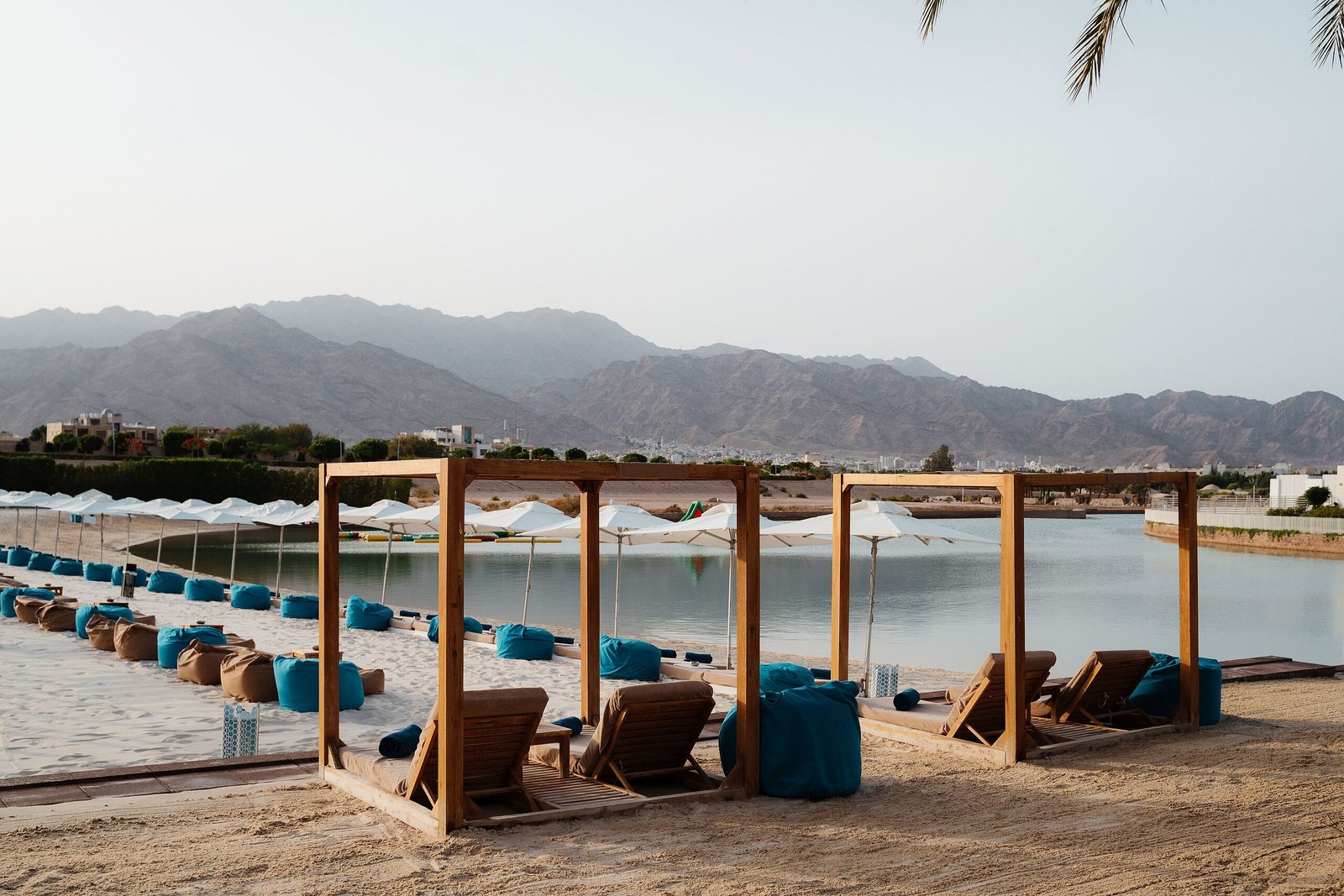
30–36 °C, climbing through the month.
Overnight lows
16–22 °C.
Humidity
Very low, around 28 per cent — the heat is dry rather than heavy.
Rain
About a 2 per cent chance on any given day.
Wind
Afternoon wind averages around 20 km/h.
What that means
Put outdoor activity before 11:00 or after 16:00. The 12:00–16:00 window belongs to sessions, lunch or the water. Heat exhaustion is the single most likely medical problem a delegate will have.
Sea temperature in early May runs 22–25 °C — a shorty wetsuit, or none.
Being a good guest
None of this is difficult. Jordanians are forgiving of visitors who get it slightly wrong and warm to those who try.
Smart-casual, shoulders and knees covered
That applies in town, in the markets and at any religious site. No headscarf is required for women. Swimwear is normal on hotel and club beaches and on dive boats, but cover up walking into town. Men should avoid shorts in formal or official settings.
Friday is the holy day
The Jordanian weekend is Friday and Saturday. Government offices and many businesses close on Friday, especially between about 11:00 and 14:00 for prayers. Hotels, restaurants and tourist sites in Aqaba stay open. The conference runs Wednesday to Friday, so expect the last day to feel quieter outside the venue.
Legal, available, and cheaper here
Hotel bars, licensed restaurants, pubs and some liquor stores serve over-18s, and Aqaba’s free-zone status keeps prices below the rest of Jordan. Drinking in public outside a licensed venue is illegal, and public drunkenness is taken badly.
Ask first, and know what not to point at
Ask before photographing people, particularly women. Never photograph military installations, border areas, airports or police. Aqaba sits close to two international borders, so this is a practical rule rather than a formality.
Greetings
As-salaamu alaykum works everywhere. Handshakes are standard between men; wait for a woman to extend her hand first. Use the right hand for eating, giving and receiving. Coffee or tea will be offered readily, and accepting at least one cup is the polite answer.
Practicalities
Emergency number
911 reaches police, ambulance and fire on one national line. In practice, hotel reception is often faster at getting the right help to the right place — call them too.
Hospitals
Princess Haya Bint Al-Hussein Hospital is the principal facility in Aqaba; Prince Hashem Hospital handles emergency admissions. There are private clinics and a hyperbaric chamber for diving incidents. Serious cases are referred to Amman. Pharmacies are well stocked and many medicines are available over the counter.
Water
Tap water is chlorinated and generally considered safe in Aqaba hotels, but bottled water is the norm and is what visitors are advised to drink. It costs around half a dinar for 1.5 litres. Avoid ice from informal street vendors.
Sun and heat
UV is intense and the air is dry enough that you will not notice how much you are losing. Drink more than you think you need, use SPF 50, wear a hat and sunglasses, and keep out of the 12:00–16:00 sun. Wadi Rum is hotter still.
Crime
Baseline risk is low. Petty theft and taxi overcharging are the realistic exposures. Tourist police keep a visible presence in Aqaba’s tourist areas.
Sixty days out
Four things that are your responsibility rather than the organisers’, and that are worth doing on a calendar reminder rather than the week before you fly.
Check your own government’s travel advice
Read the current advice your foreign ministry publishes for Jordan, and read your institution’s travel policy alongside it. Many universities require approval or registration before staff travel, and the approval office — not the visa desk — is usually the slower step.
Hold comprehensive travel insurance
Make sure it covers medical treatment and medical evacuation, and read the exclusions rather than the summary. If you plan to dive, check that diving is covered and to what depth. Keep the policy number and the emergency line somewhere you can reach without your phone.
Re-confirm about 60 days out
Visa rules, airline routes at AQJ and every price on this page can change between now and May 2027. Re-check the visa position with the nearest Jordanian mission, the flights directly with the carrier, and the ASEZA waiver conditions before you commit to a routing. Where a refundable fare costs only a little more, take it.
Tell us what you need
Invitation letters, accessibility requirements, dietary requirements or anything else that affects your trip — write to info@ieeesea.net. Earlier is better than closer.
Questions
For most nationalities, no — a 40 JOD visa on arrival covers 30 days, and arriving directly into Aqaba waives even that fee. But nationals of Afghanistan, Iran, Pakistan and many African states need prior approval, which takes weeks. Check with the nearest Jordanian embassy as soon as your paper is accepted.
There is no fee and no minimum stay. There are two conditions: leave within one month, and leave through the same entry point you arrived at. Flying into Aqaba and out of Amman breaks the second one and you will be charged the standard visa fee.
You clear immigration at Queen Alia, so you enter Jordan at Amman rather than Aqaba and the ASEZA waiver does not apply. Either pay the 40 JOD visa on arrival, or buy a Jordan Pass before you fly — which also covers Petra if you are going.
Buy it if you are visiting Petra, or if you are routing through Amman. Petra entry alone is 50 JOD and the visa is 40 JOD, so the 70 JOD Wanderer tier pays for itself. Skip it if you fly in and out of Aqaba and are not going to Petra.
King Hussein International (AQJ) is about 10–11 km from the centre of Aqaba, roughly 15 minutes by road. A taxi is 5–10 JOD. Agree the fare before you set off.
Light, covering clothes: 30–36 °C by day, 16–22 °C at night, very dry, very high UV. A hat, sunglasses, SPF 50 and a refillable bottle. Smart-casual is right for sessions. Shoulders and knees covered in town and at any religious site. A universal adapter for 230 V, and swimwear if you plan to get in the water.
In hotels, larger restaurants and shops, yes. Taxis, small cafés, markets and tips are cash. ATMs are common but local withdrawal fees run around 4 JOD per transaction, so take out larger amounts less often — and always decline dynamic currency conversion.
Yes, and Aqaba’s free-zone status makes it cheaper than the rest of Jordan. Hotel bars, licensed restaurants, pubs and some liquor stores, 18 and over. Drinking in public outside a licensed venue is illegal.
No. Ramadan in 2027 runs from roughly 8 February to 10 March, with Eid al-Fitr around 11 March. May is clear, so no fasting-related restrictions apply during the conference.
The conference runs Wednesday to Friday, and Friday is the holy day — the Jordanian weekend is Friday and Saturday. Hotels, restaurants and tourist sites in Aqaba stay open, but government offices and many businesses close, particularly between about 11:00 and 14:00. Expect quieter streets.
Conference assistant
Ask about deadlines, tracks, fees, visas or Aqaba. Answers come from this site.