

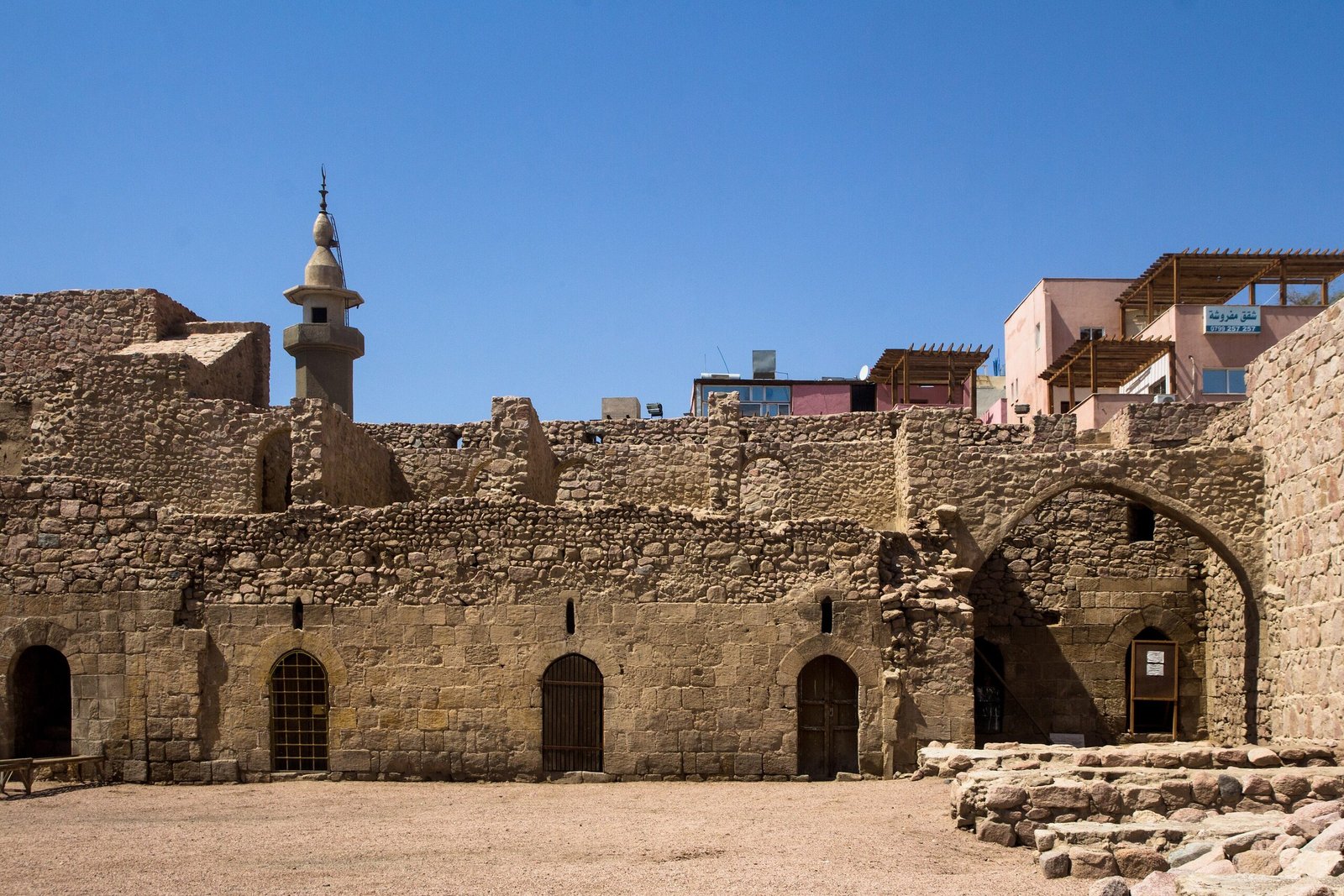
Aqaba Fort
Built under Sultan Qansuh al-Ghawri and later a Hashemite base during the 1917 Battle of Aqaba. Open Sunday to Thursday 08:00–17:00, weekends from 10:00.
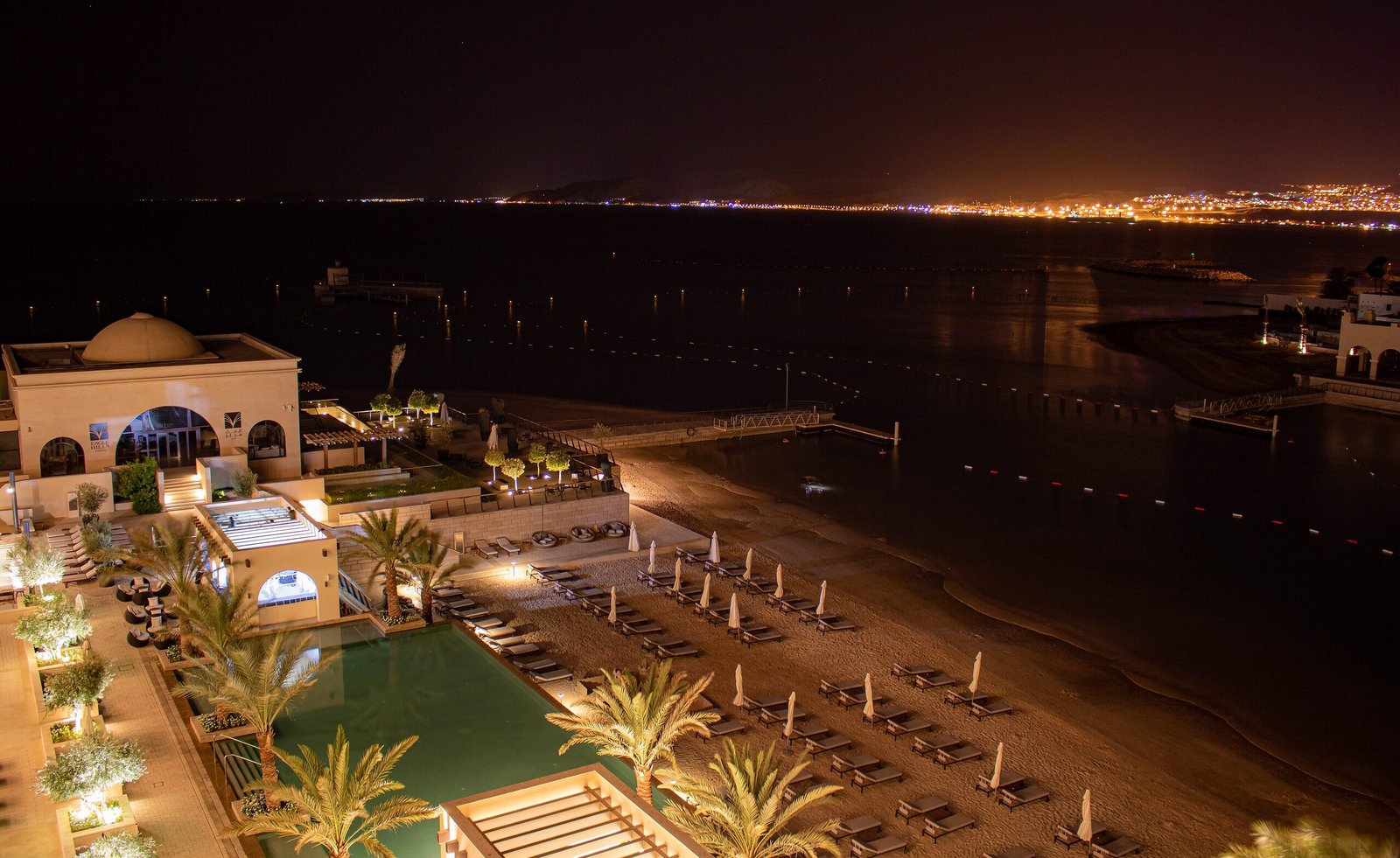
Aqaba, Jordan
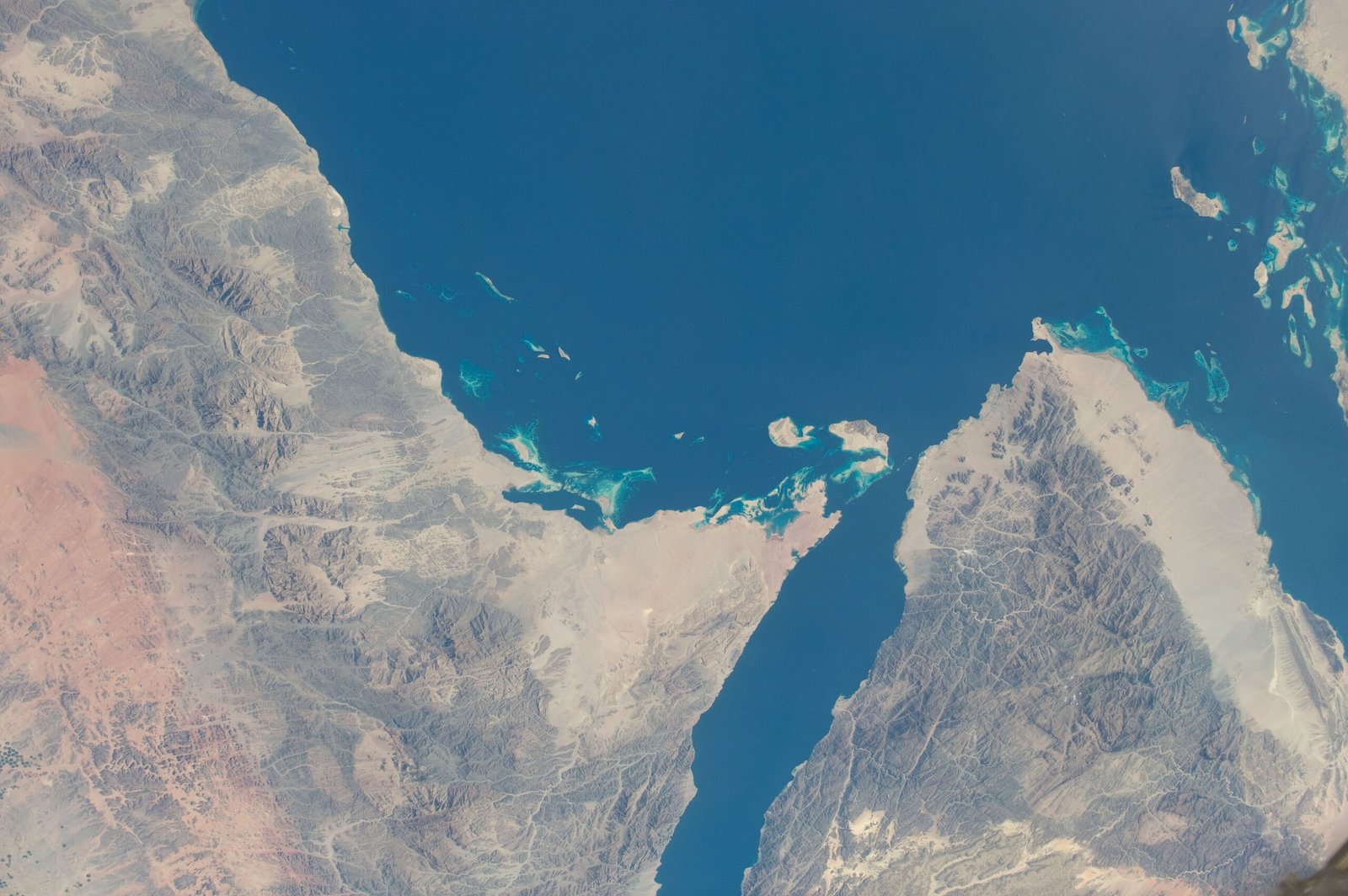
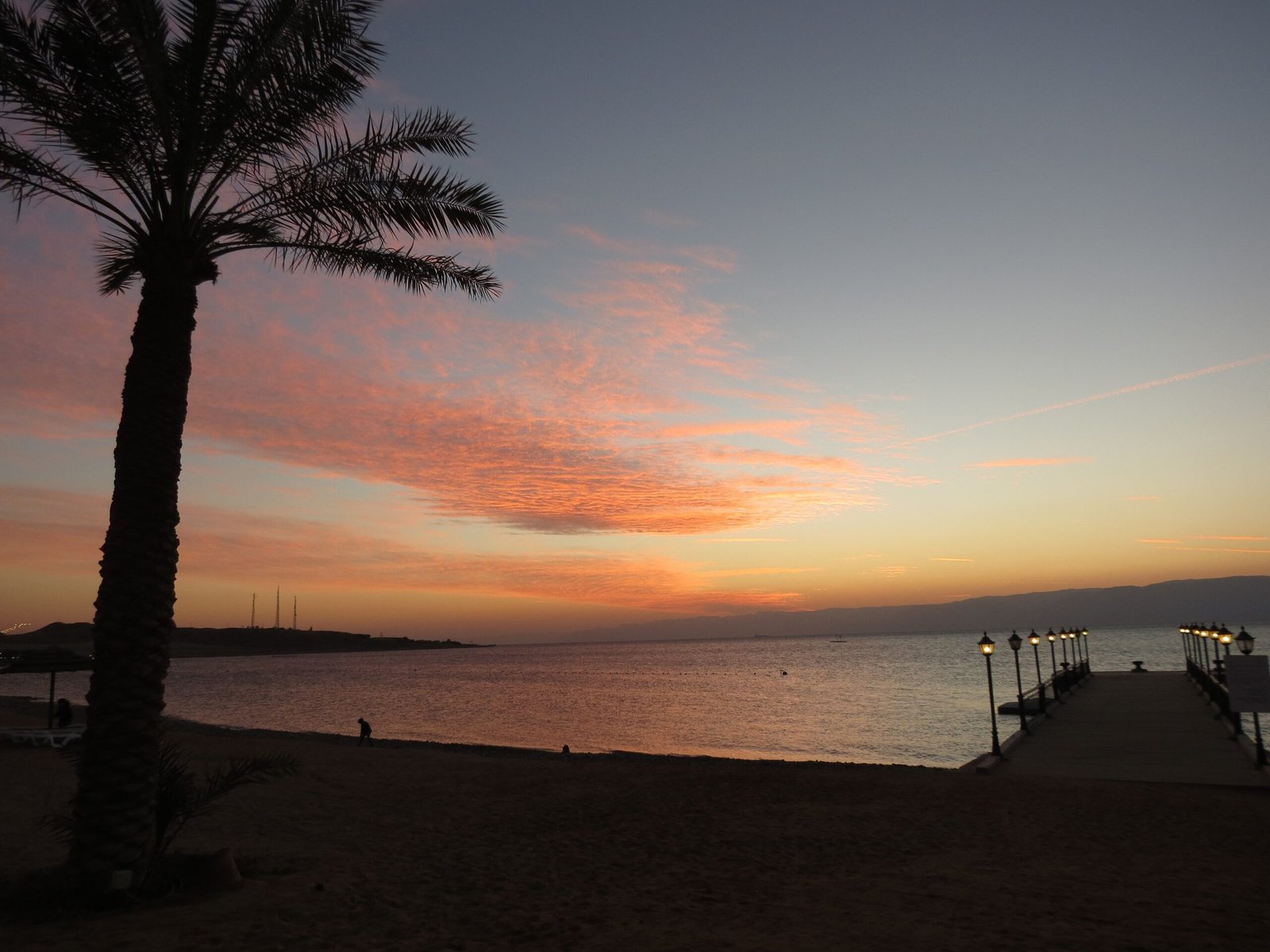
Jordan has one coastal city. It sits at the top of the Gulf of Aqaba with Egypt, Israel and Saudi Arabia all visible from the waterfront, a marine reserve a fifteen-minute taxi ride from the venue, Wadi Rum an hour inland and Petra two hours north. That combination is the reason the conference is here.
Photo: AliAbuRas · CC BY-SA 4.0
Where you are
Aqaba is Jordan’s only seaport and its only stretch of sea — about 27 kilometres of it. Roughly 95,000 people live in the city itself, more across the governorate. Since 2001 it has been run as the Aqaba Special Economic Zone, a low-tax duty-free area with its own entry regime, which is why arriving here is cheaper and simpler than arriving anywhere else in the country.
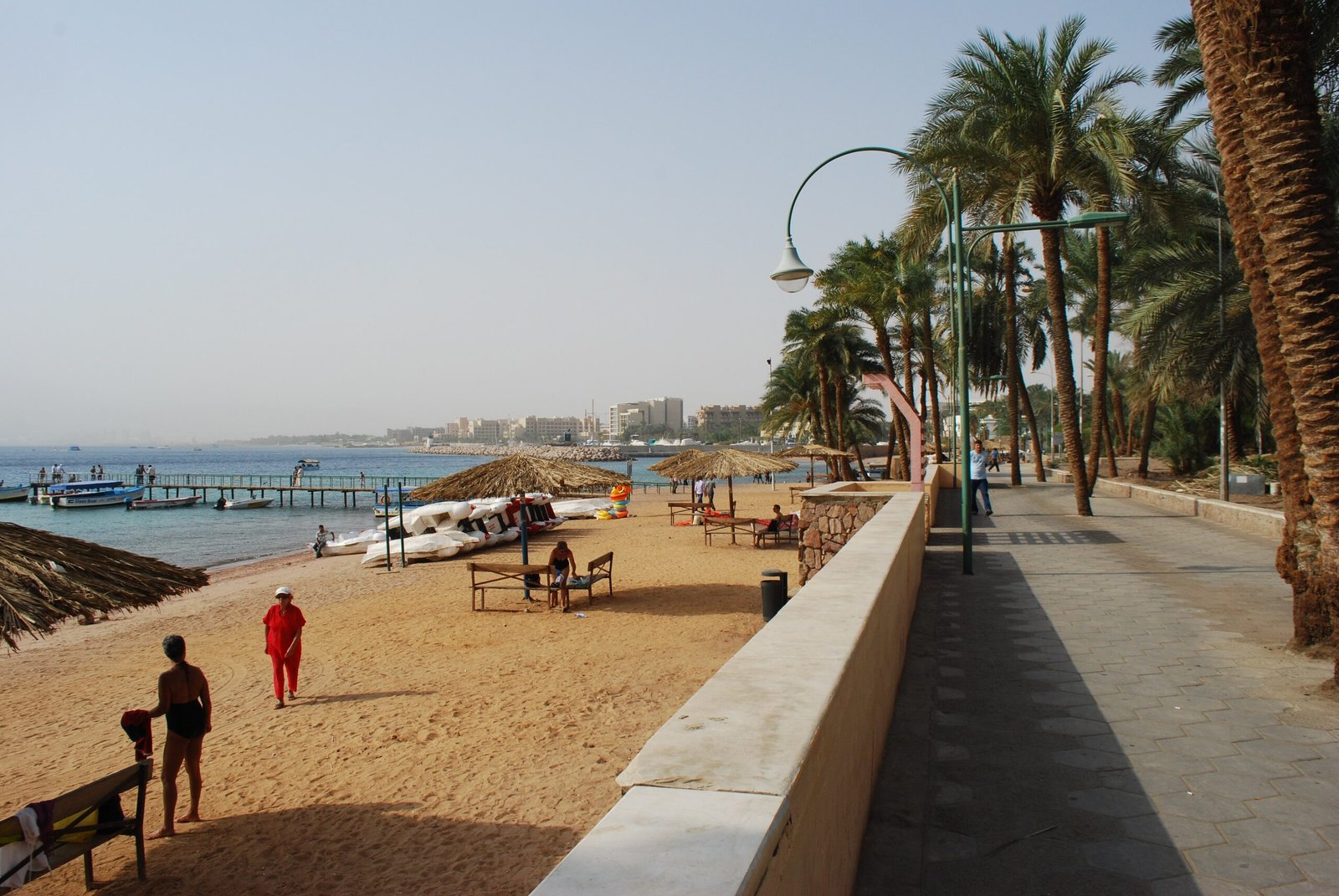
The centre is genuinely walkable. The fort, the flagpole, the museum and the Ayla ruins all sit within a kilometre or two of the corniche hotels and can be linked on foot in a free afternoon. The dive sites and the resort beaches are fifteen to twenty minutes south by taxi.
In the city
Aqaba has been a port for a very long time, and most of the evidence is within walking distance of the hotels.
Built under Sultan Qansuh al-Ghawri and later a Hashemite base during the 1917 Battle of Aqaba. Open Sunday to Thursday 08:00–17:00, weekends from 10:00.
The tallest free-standing flagpole in the world from 2004 until 2008, and still among the ten tallest. It flies the flag of the 1916 Arab Revolt and is visible from three neighbouring countries. It stands beside the fort — one stop, not two.
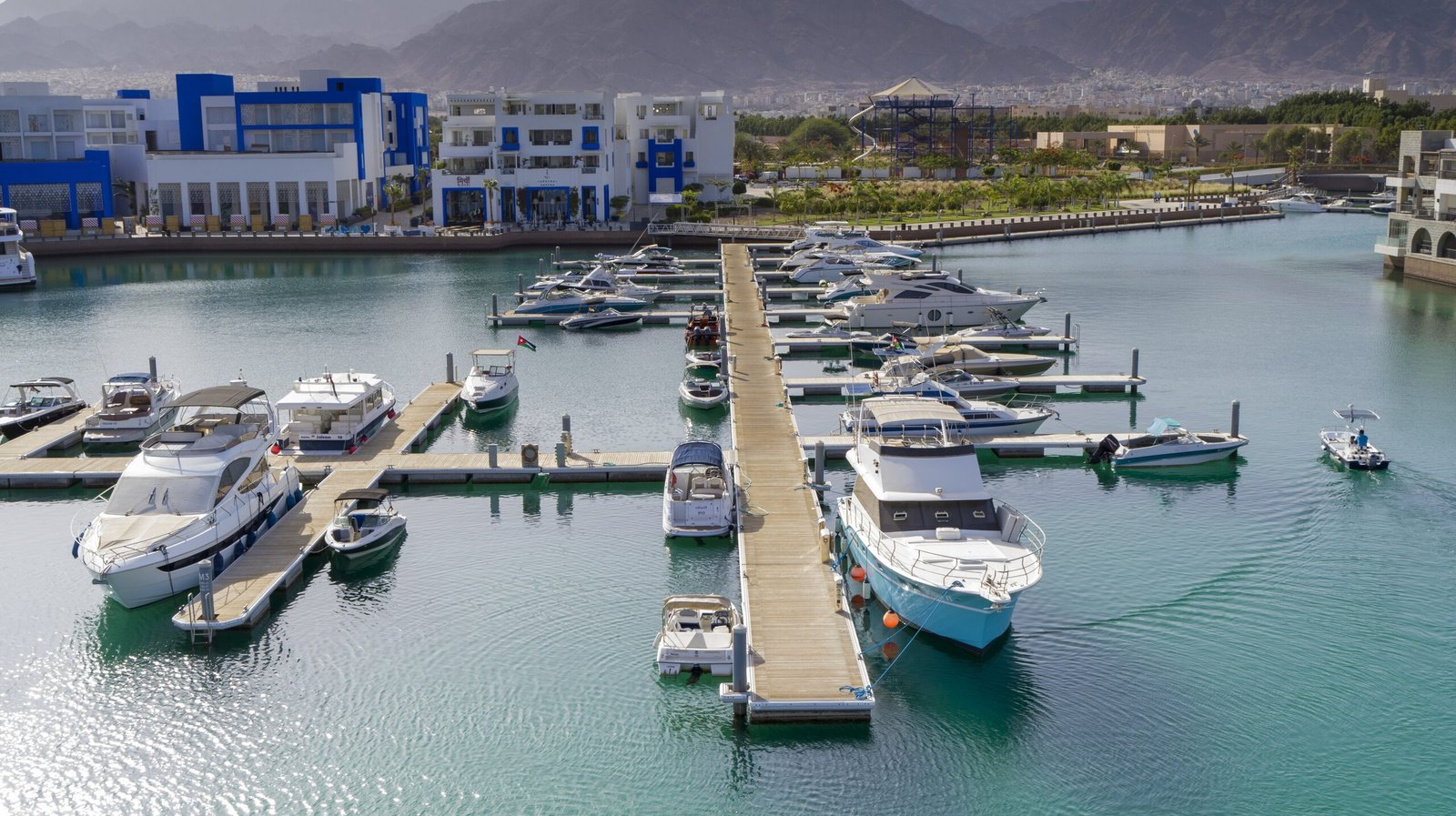
A walled city 165 by 140 metres with four gates, one per compass point, founded under Caliph Uthman and abandoned by 1116 after earthquakes and Crusader raids. Excavated 1986–93, free, open air, and a fifteen-minute walk from the corniche hotels.
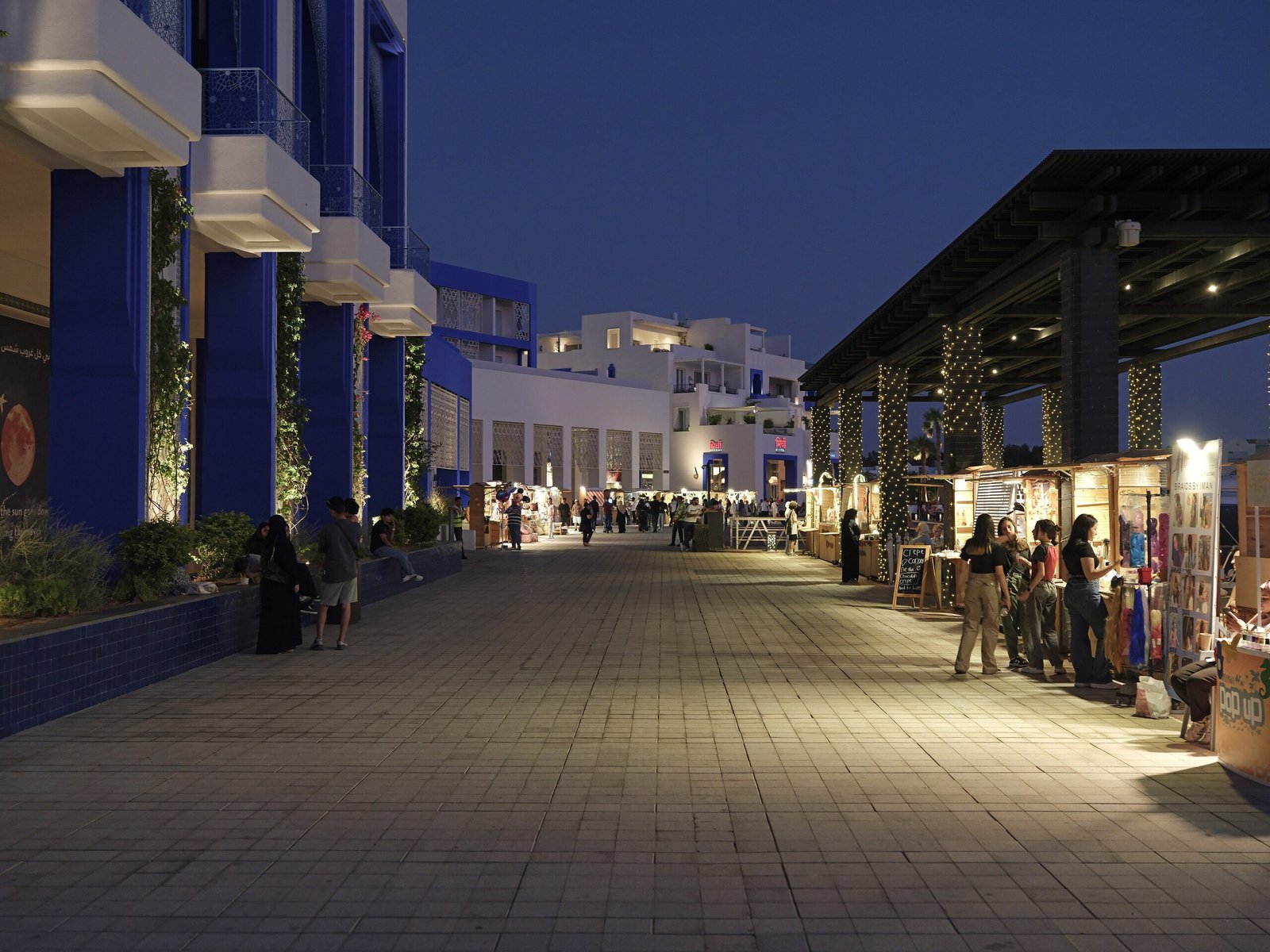
Ceramics, glass, metalwork, Kufic inscriptions and coins, nearly all of it excavated from Ayla next door. Open 08:00–17:30 in May.
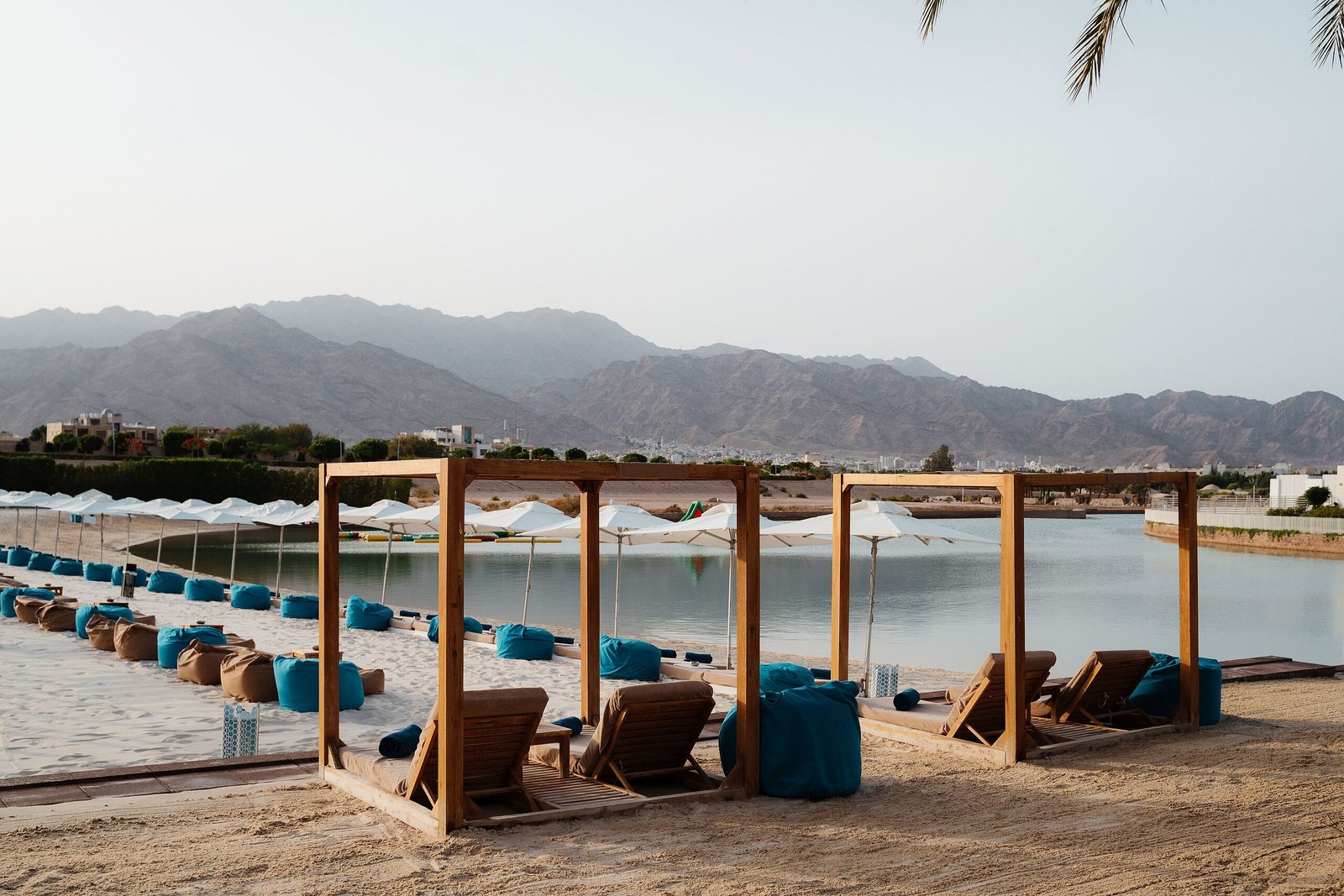
A half square kilometre of constructed wetland on the migration corridor between Eurasia and Africa, where over 1.5 million waterbirds pass through each year and more than 250 species have been recorded. Early May catches the tail of the spring passage.
Spices, dates, gold, textiles and Bedouin goods, a few streets back from the water. Best in the hour before sunset, when it fills up.
The Red Sea
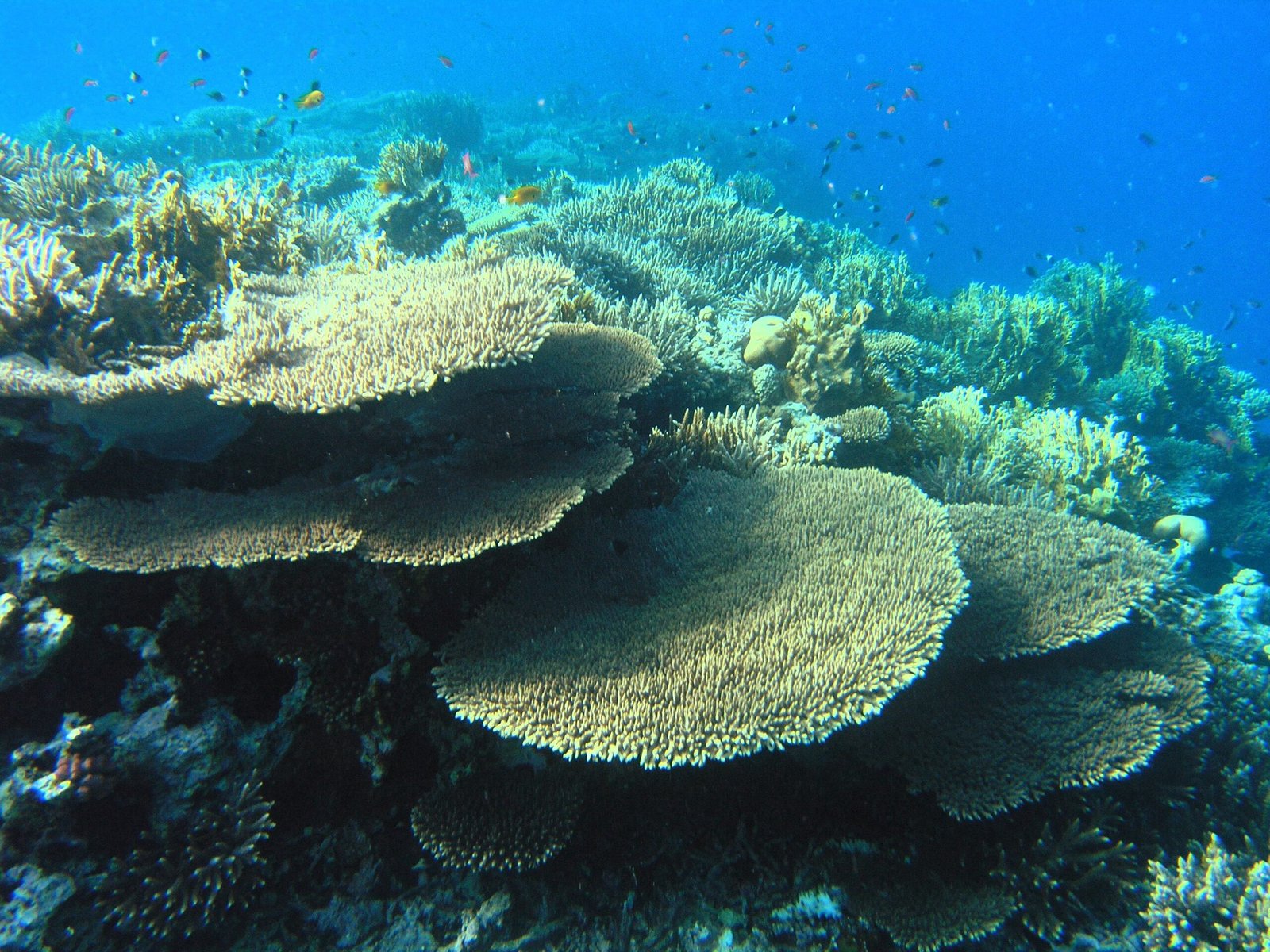
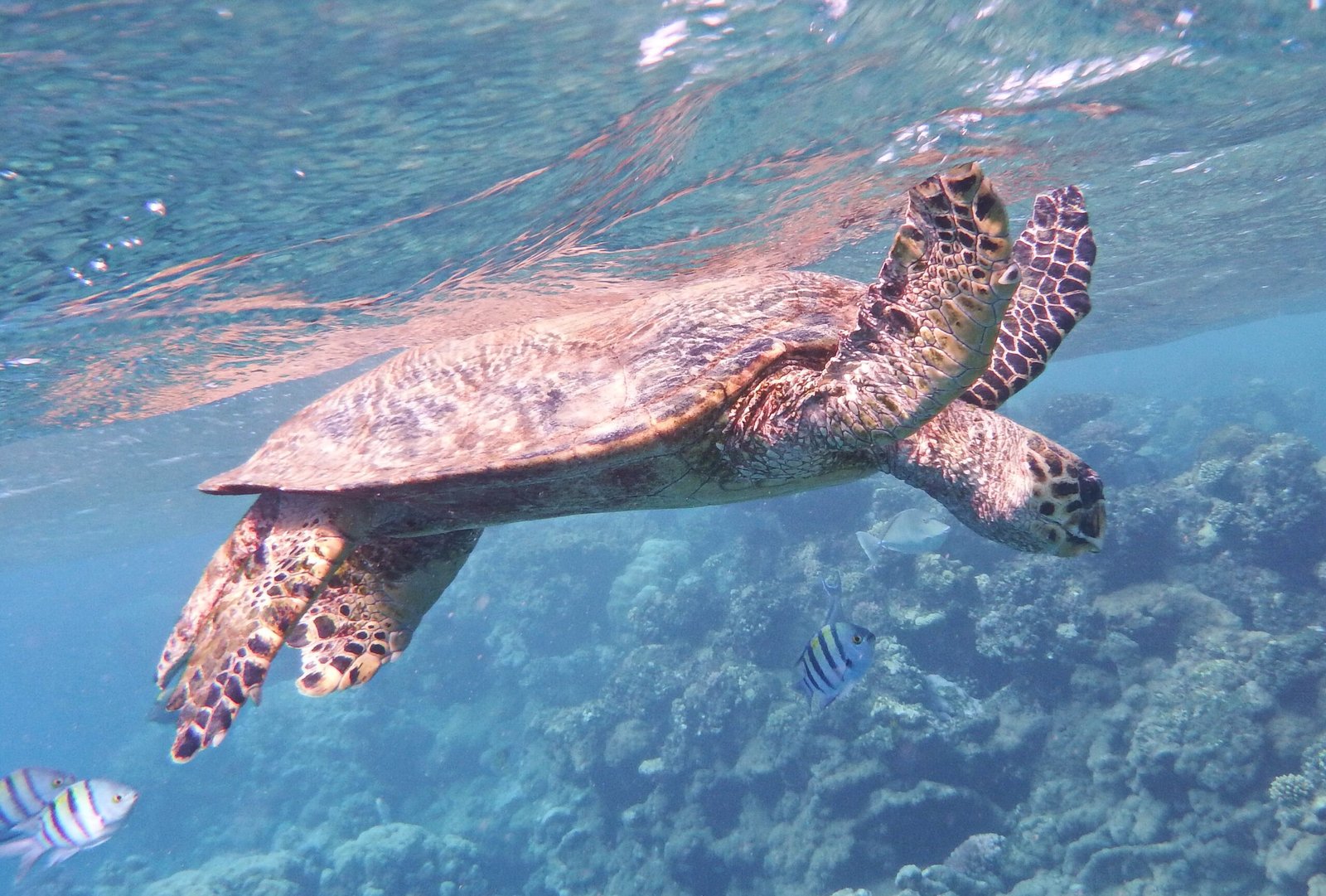
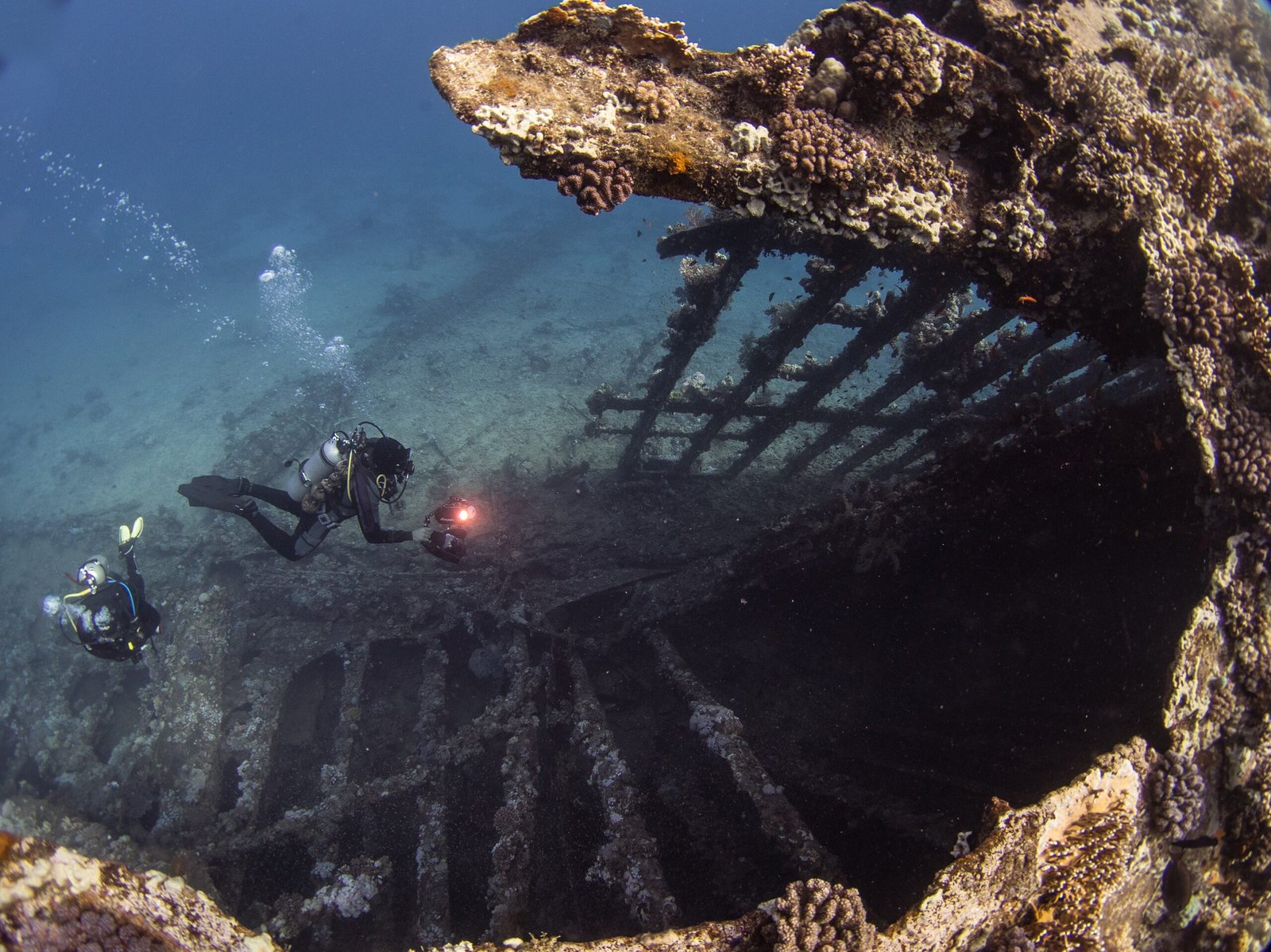
Most of Aqaba’s dive sites are shore entries along the South Beach road. No boat, no early start — which is what makes a dive possible in a gap between sessions.
157
Hard coral species recorded in the Aqaba Marine Reserve
507
Fish species recorded in the reserve
2.8km²
Aqaba Marine Reserve, protecting 27% of the coastline
22–25°C
Sea temperature in early May — a shorty wetsuit, or none
60 km · 50–70 min
UNESCO World Heritage, 2011
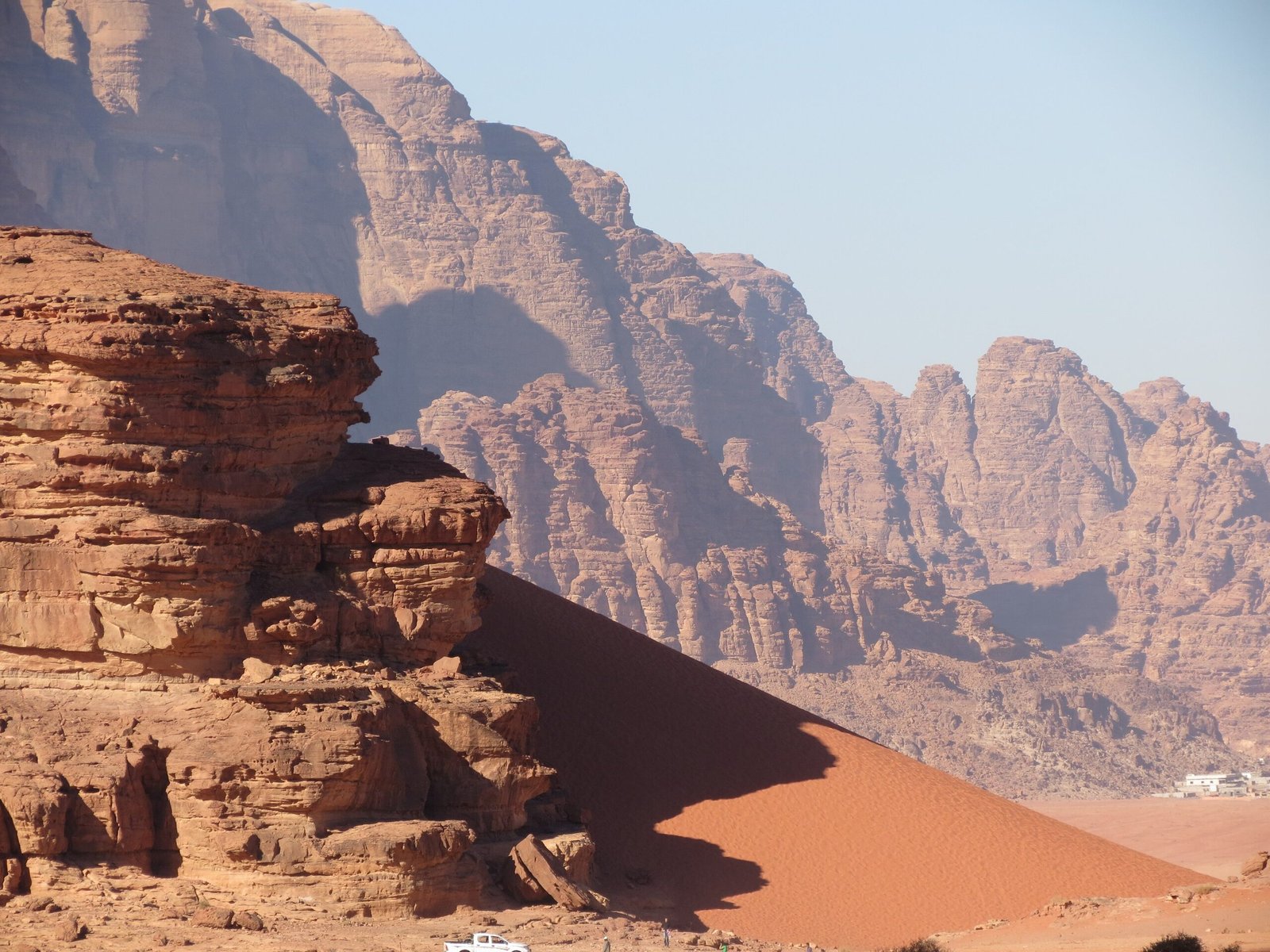
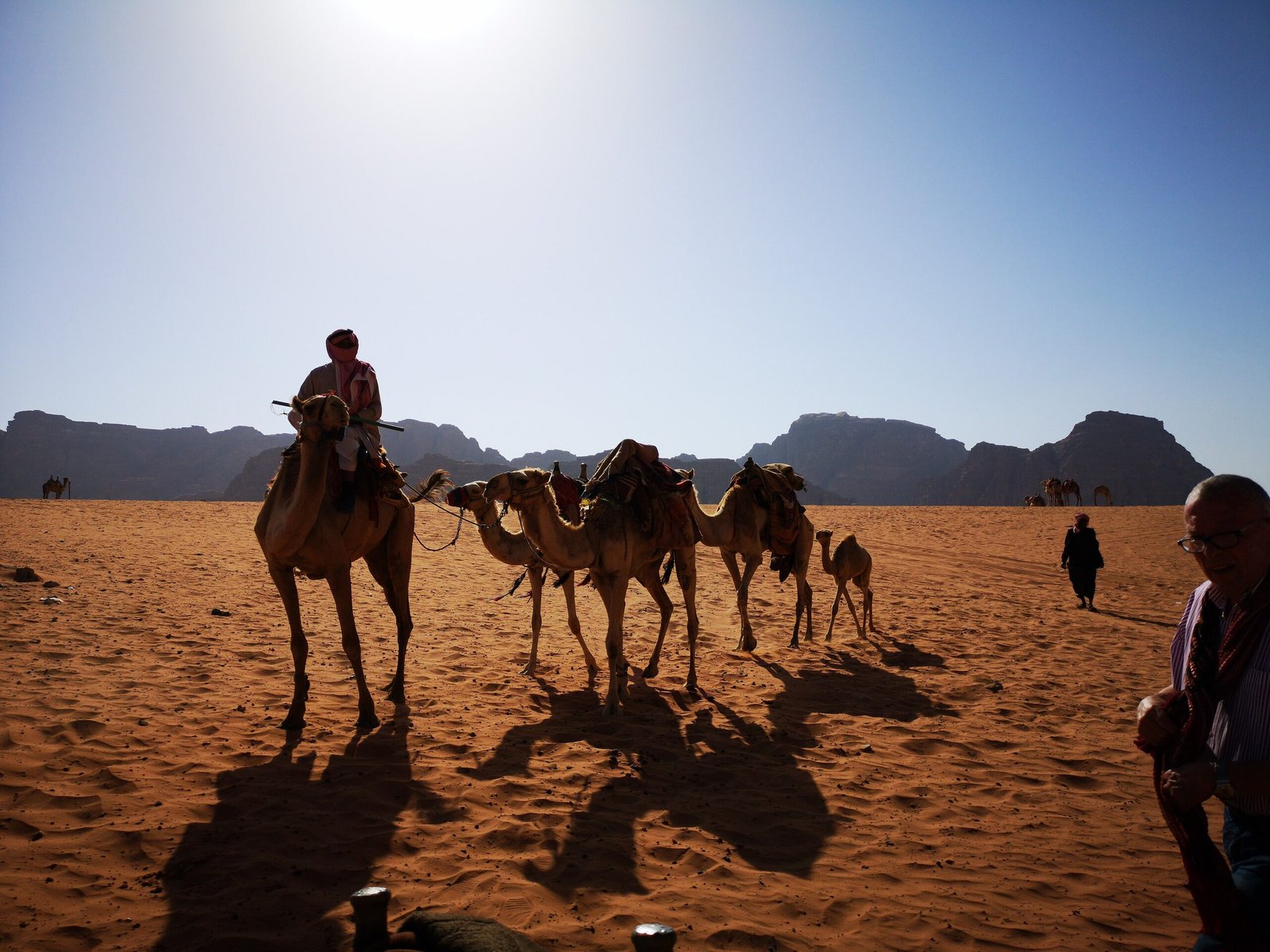
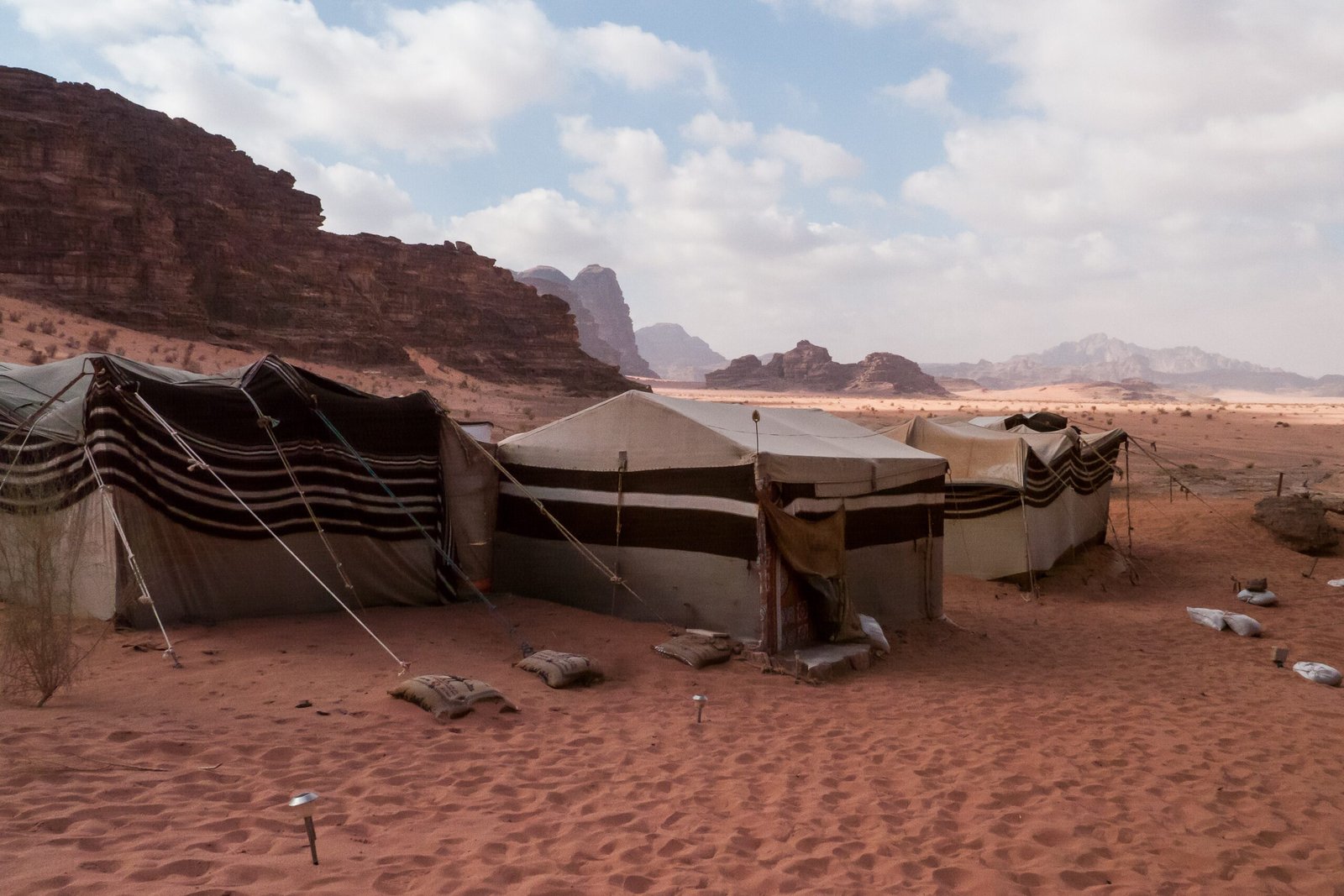
74,000 hectares of sandstone and granite rising out of red sand, managed as a protected area and lived in by Bedouin communities who run everything inside it.
Private vehicles stop at Rum Village. Everything beyond is reached with a local Bedouin driver, which is the arrangement that keeps the tourism economy inside the community that lives there. Entry is JOD 5 and is covered by the Jordan Pass.
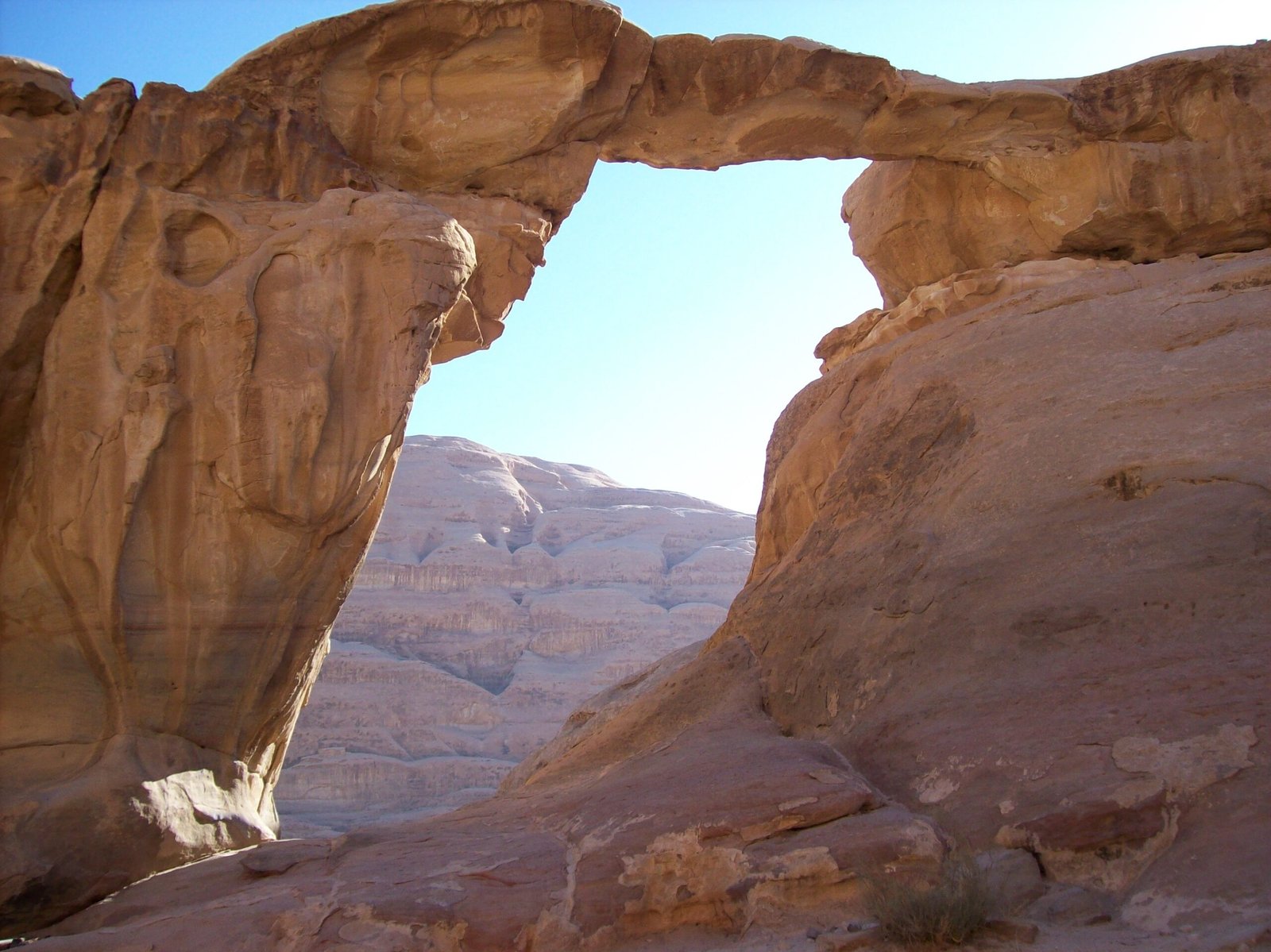
The classic half-day takes in Lawrence’s Spring, the petroglyphs in Khazali Canyon, the red dunes at Jebel Umm Ulaydiyya and the Um Fruth rock arch, which you can scramble without ropes. A full day adds the further valleys and time for tea in the shade.
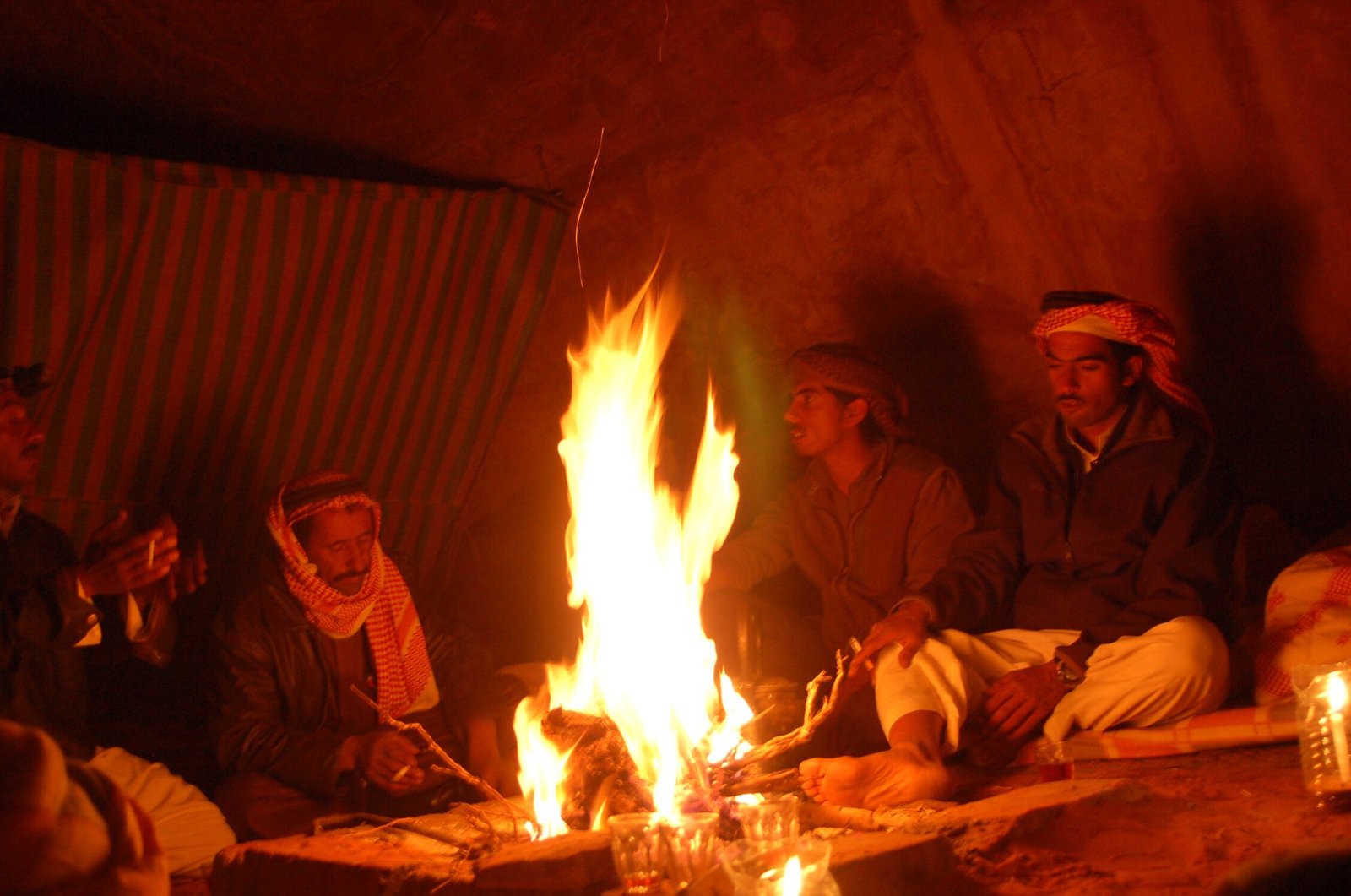
Overnight is the version worth doing. Camps run from about JOD 30 per person for a shared-bathroom tent with dinner and breakfast, up to considerably more for en-suite tents and the transparent domes marketed as Martian pods. Dinner is zarb, cooked in an underground oven. After it gets dark there is effectively no light pollution.
T. E. Lawrence moved through here during the Arab Revolt of 1917–18, staging toward the capture of Aqaba. Since then it has stood in for another planet in Lawrence of Arabia, Red Planet, Prometheus, The Martian, Rogue One, Aladdin, The Rise of Skywalker and both parts of Dune.
125–133 km · about 2 hours
UNESCO World Heritage, 1985 · New7Wonders, 2007
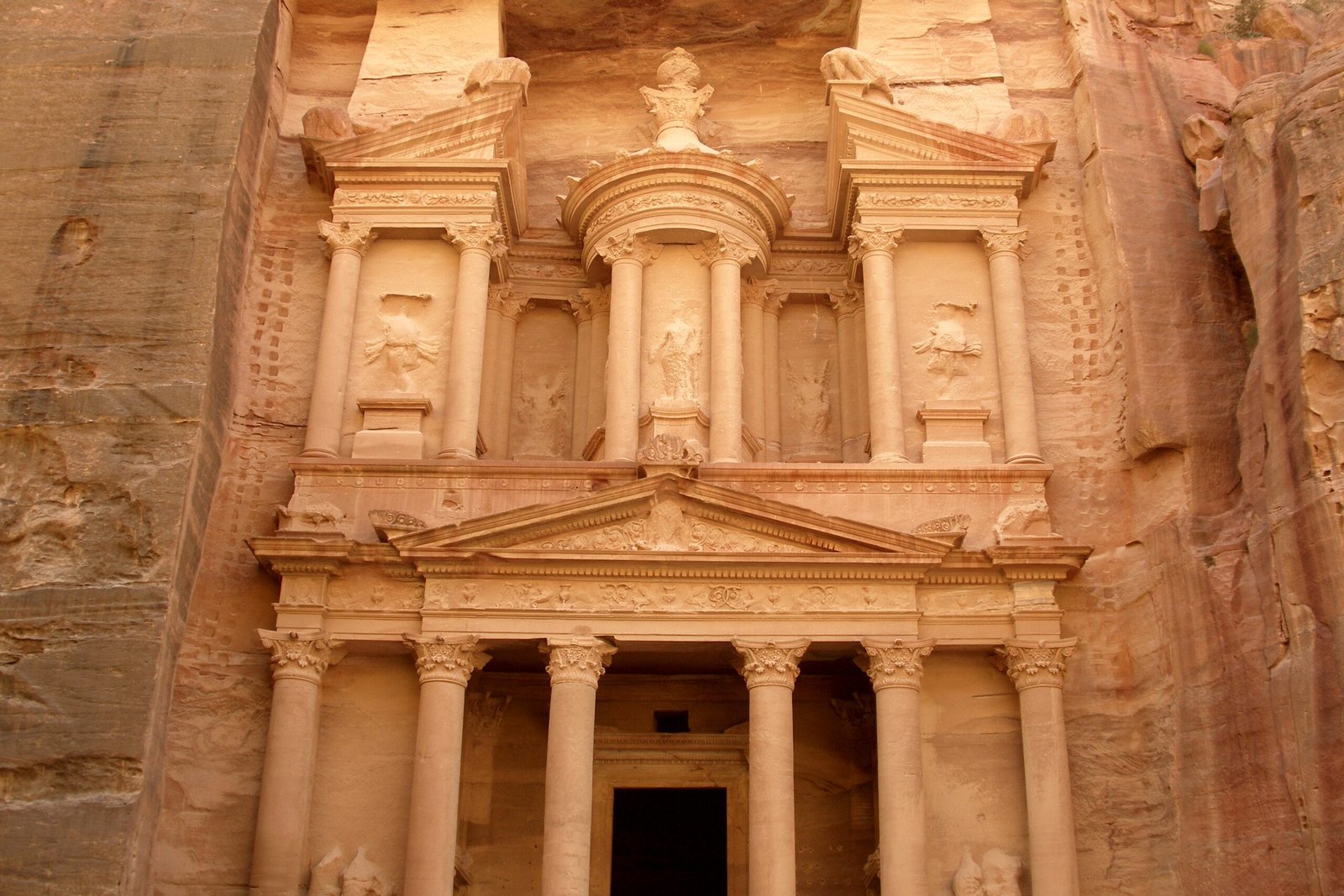
The Nabataean capital — settled from the fourth century BC, their capital from around the second, at its height around 20,000 people, annexed by Rome in 106 AD and largely emptied after the earthquake of 363. UNESCO-listed in 1985.
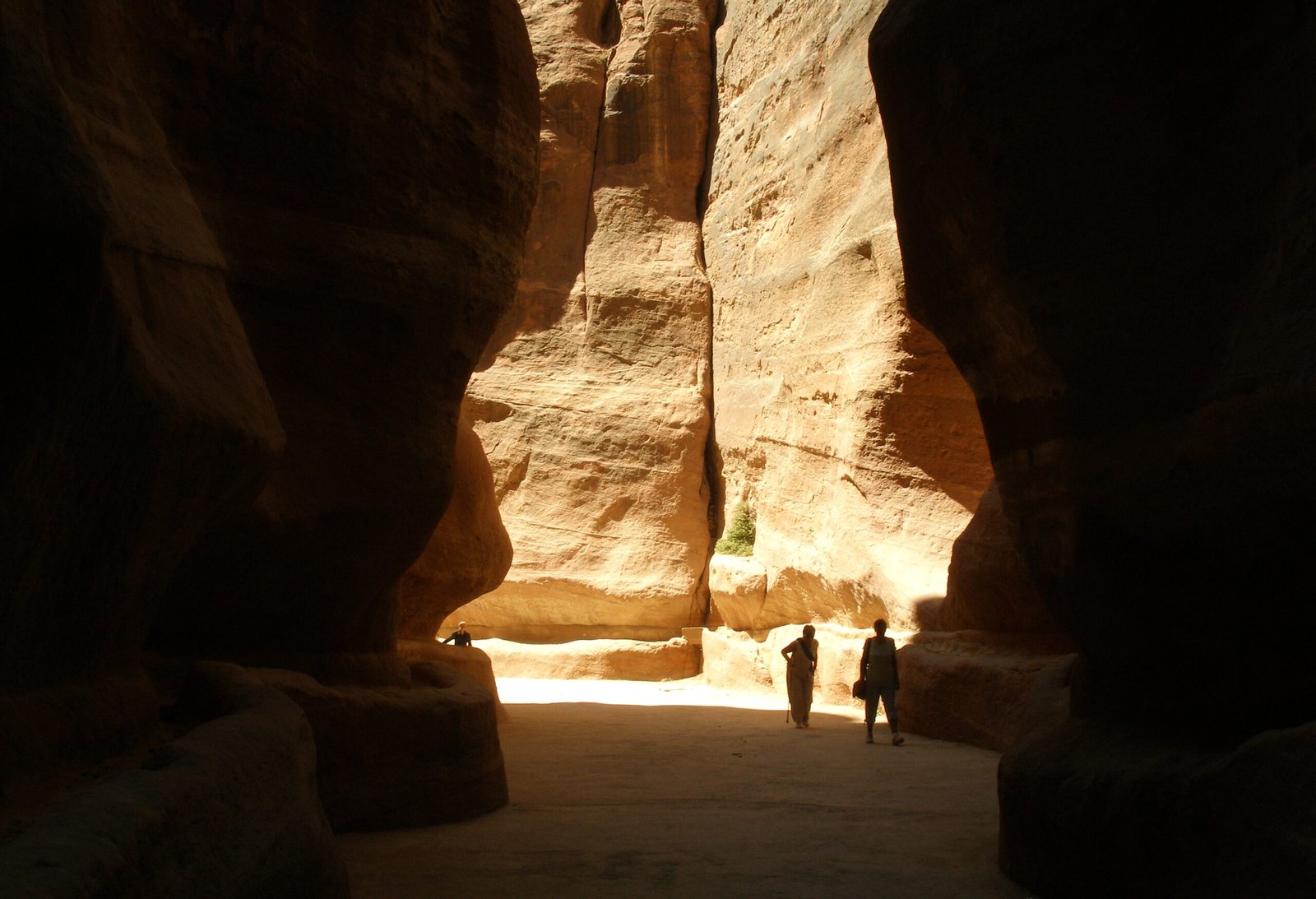
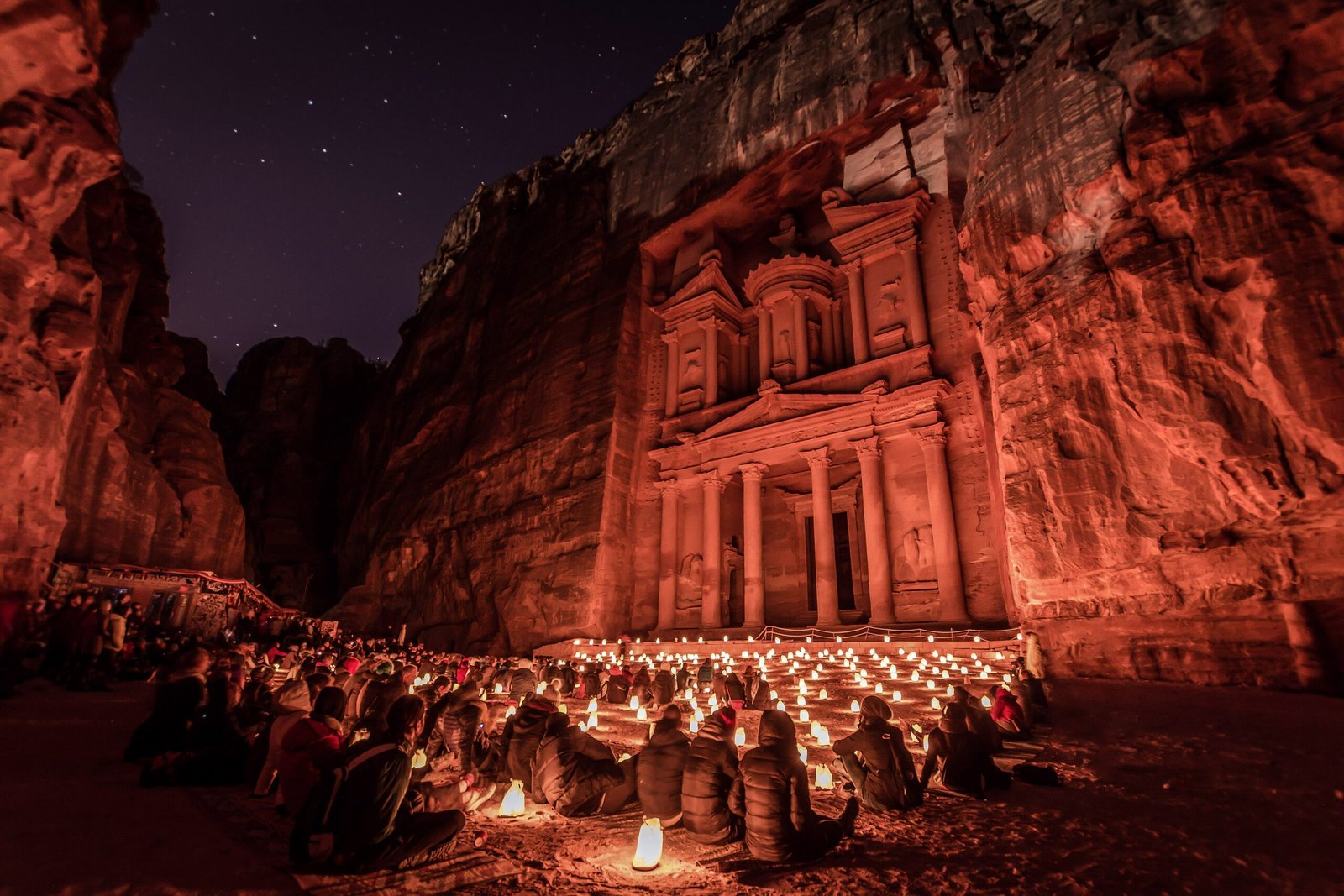
From the visitor centre it is 800 m to the mouth of the Siq, then 1.2 km through the canyon itself — three to four metres wide in places, up to eighty deep — before it opens without warning on Al-Khazneh, the Treasury, 37 m of facade in a space too narrow to photograph properly.
Past that the site keeps going: the Street of Facades, a theatre cut for four thousand people, the Royal Tombs, the colonnaded street. Ad-Deir, the Monastery, is 45 m across and sits at the top of roughly 800 rock-cut steps, a climb of about an hour that most people are glad they did.
One day covers the Siq, the Treasury, the Royal Tombs and the Monastery at a brisk pace. Two days is the honest recommendation. Terrain past the Treasury is loose gravel and sand; a golf-cart shuttle runs to the Treasury and back, and horses, carriages and donkeys are available further in.
Petra by Night — a candlelit walk through the Siq with Bedouin music — runs on selected evenings and is not included in the Jordan Pass. Sources disagree on both the current price and which nights it operates, so confirm directly with the Petra Development and Tourism Region Authority before promising it to anyone.
240–270 km · 3–3.5 hours
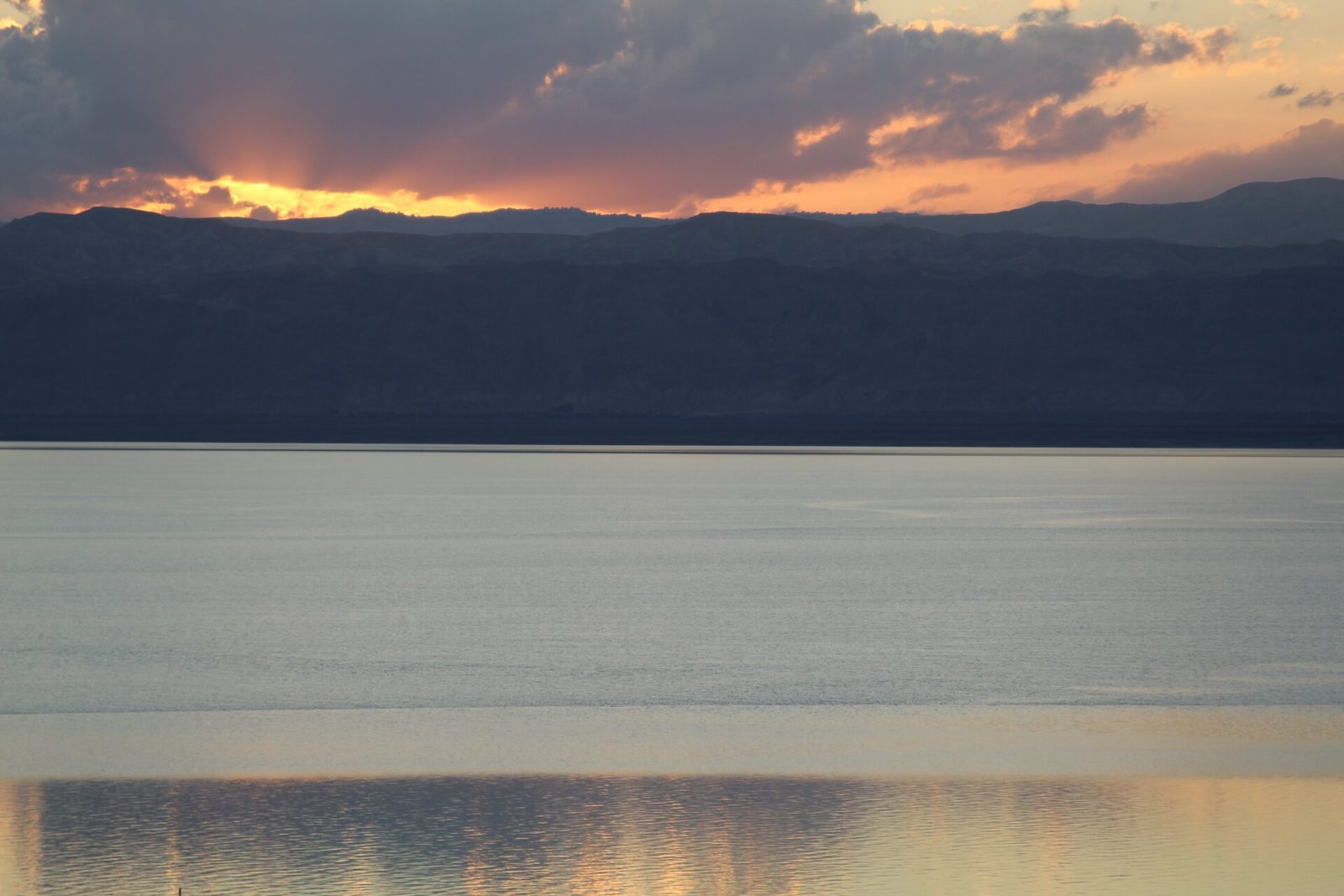
430 m below sea level
The lowest exposed land on Earth, about ten times as salty as the ocean, and the one swim where staying upright is the hard part.
Float on your back, ten to fifteen minutes at a time, and do not put your face in it. The mineral mud is applied, left to dry, and rinsed off; resorts provide it, public beaches sell it.
Resort day passes run JOD 25–50 and include pools, towels and showers, which is the sensible option for a group. Do not shave for a day beforehand, wear something on your feet — the salt crystallises sharp — and rinse in fresh water afterwards.
What to eat
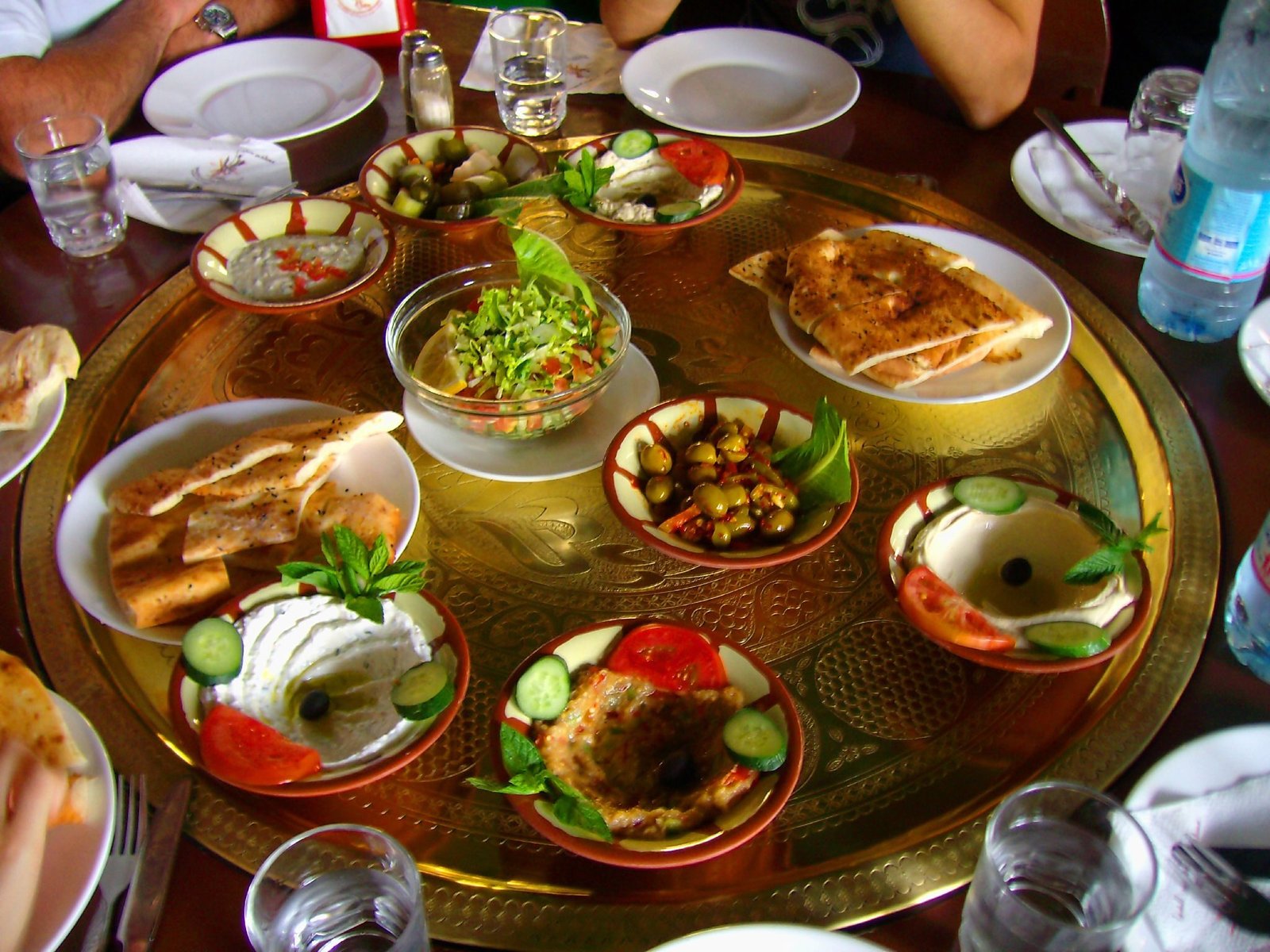
Aqaba is a fishing port with a Bedouin hinterland, and the food follows from both. Arabic coffee and sweet mint tea arrive constantly and are, by custom, politely refused a couple of times before being accepted.
Aqaba’s own dish. Red Sea fish over rice browned with caramelised onion, with a tahini and lemon sauce. Order it at the seafood houses on the corniche.
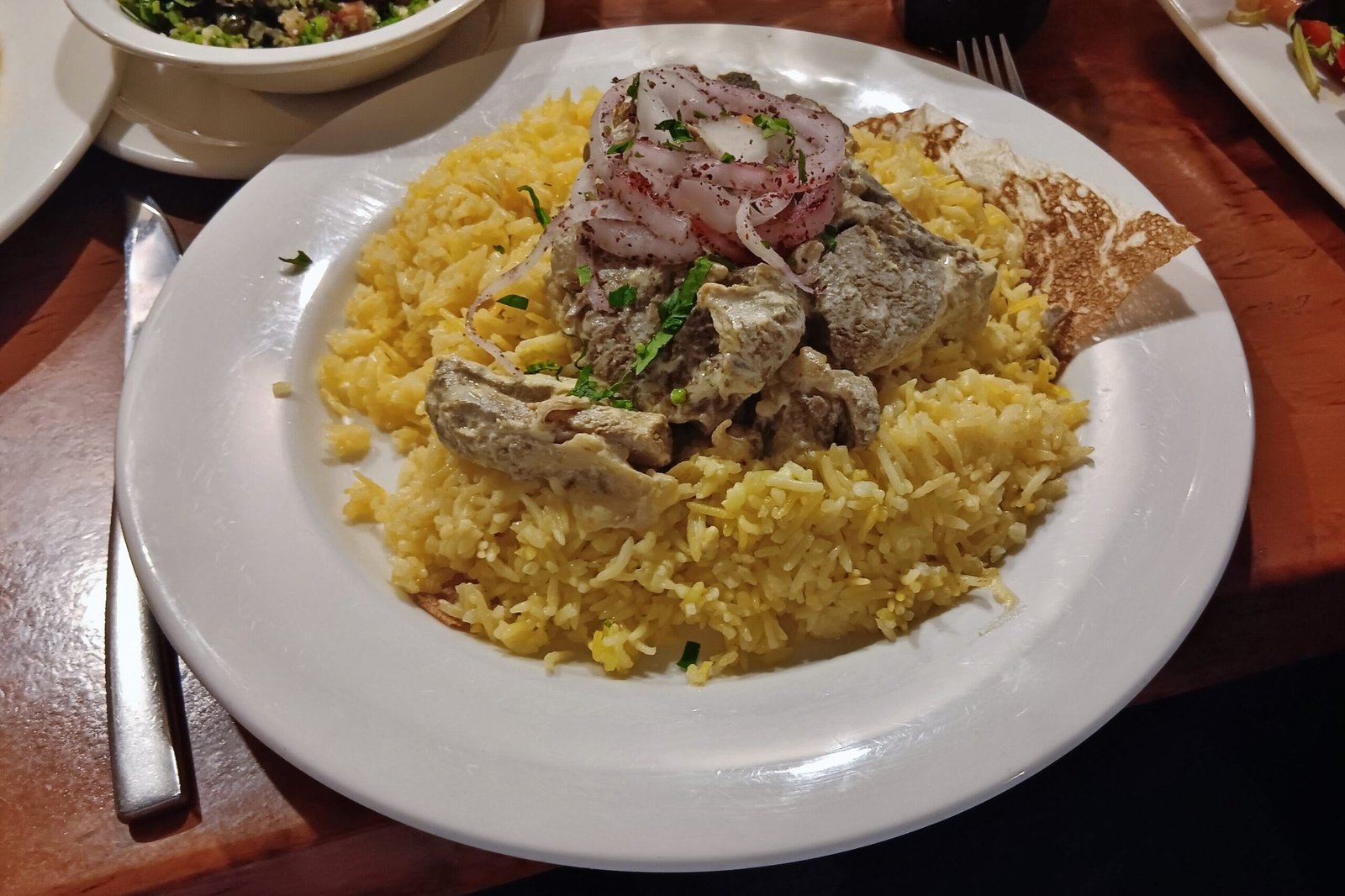
Jordan’s national dish: lamb cooked in jameed, a fermented dried yoghurt, over rice and flatbread. Eaten communally, and the obvious choice for a conference dinner.
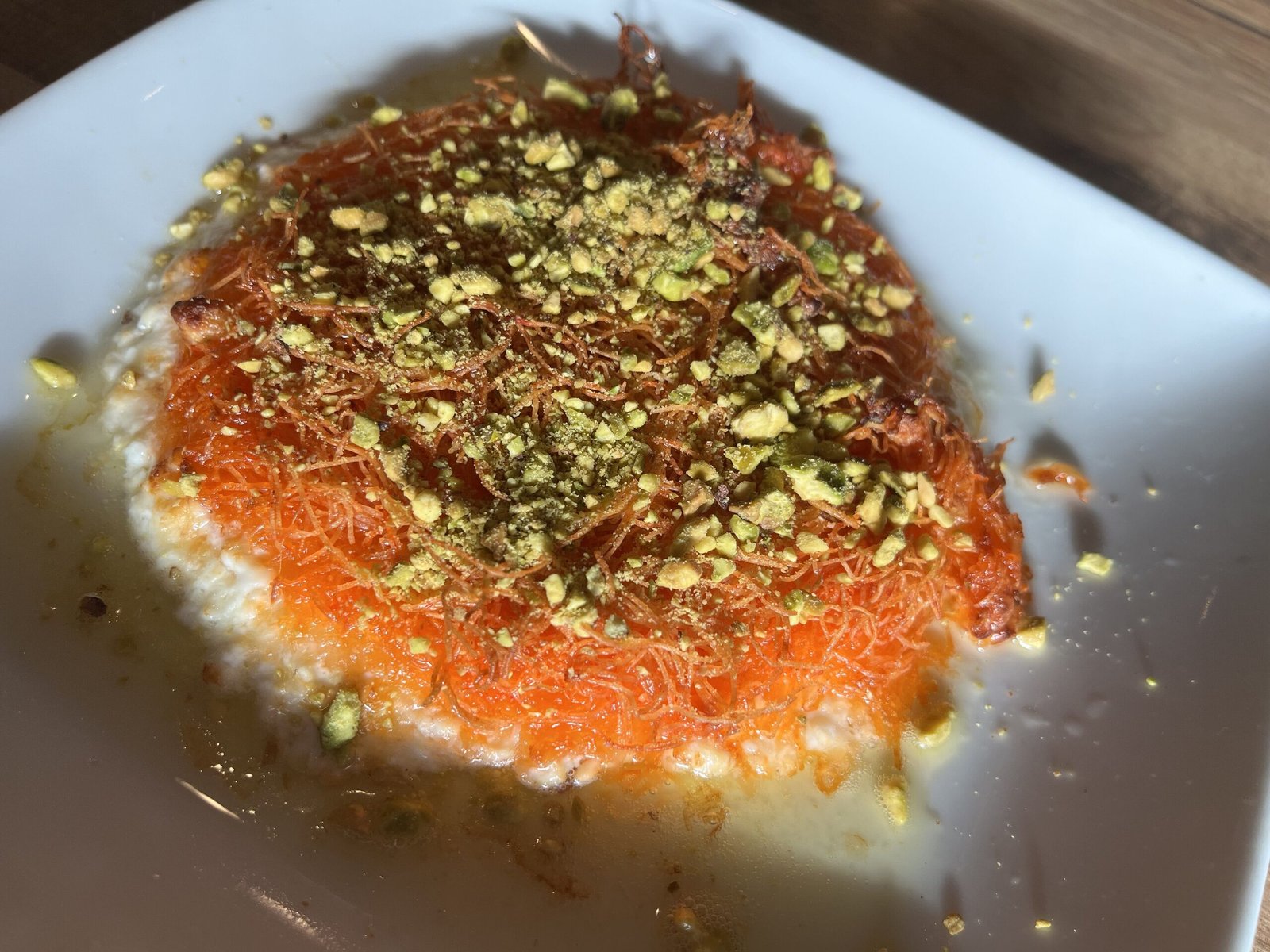
Shredded pastry over molten cheese, soaked in syrup, eaten hot. The standard end to any meal, and worth the queue.
How to fit it in
You are here to work. These are built around the free time a three-day conference actually leaves you.
01
On foot, from the corniche
Divers: one shore dive at the Japanese Garden, JOD 35–40, back inside two and a half hours door to door.
02
In and on the water
Non-divers: a glass-bottom boat is JOD 15 for the boat, and the Bird Observatory is best first thing in the morning.
03
The reason to fly into Aqaba
The Aqaba–Wadi Rum–Petra triangle is why the conference is worth extending. Nowhere else in Jordan puts all three inside a two-hour radius.
Prices are indicative 2025–26 operator rates in Jordanian dinars (1 JOD ≈ 1.41 USD, pegged). Treat them as planning figures and confirm when you book.
5–7 May 2027
Flying into Aqaba and out of Aqaba means no visa fee at all. Two extra days covers Wadi Rum and Petra properly. The travel page has the visa mechanics, the routes and the practicalities.
Conference assistant
Ask about deadlines, tracks, fees, visas or Aqaba. Answers come from this site.